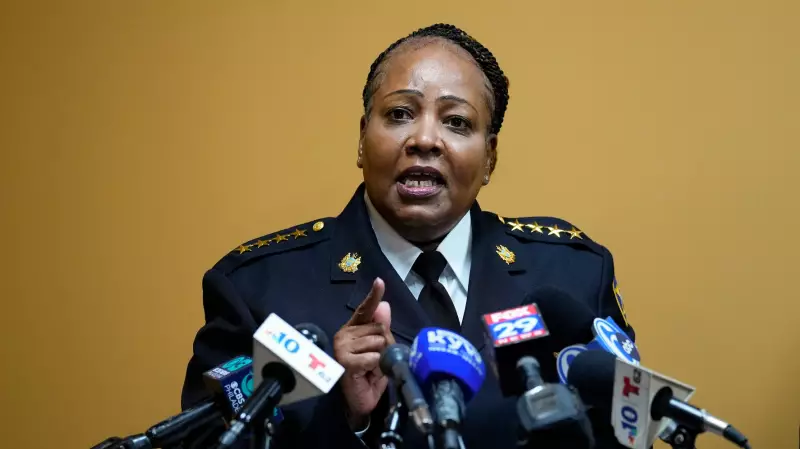
Philadelphia's top law enforcement officials have launched a scathing public condemnation of U.S. Immigration and Customs Enforcement (ICE) agents, labelling them "wannabe law enforcement" in the wake of a fatal shooting by a deportation officer. The rebuke centres on the killing of 37-year-old Renee Good in Minneapolis and a broader pattern of conduct that local leaders say violates both legal and moral standards.
Officials Condemn ICE Tactics and Fatal Incident
At a press conference on Thursday, Philadelphia Sheriff Rochelle Bilal stood alongside District Attorney Larry Krasner and several city council members to denounce ICE. Bilal did not mince words, directly addressing the federal agents. "No law enforcement professional wears a mask," Bilal stated emphatically. "None. None." She warned that wearing a mask would not prevent arrest if agents commit crimes in Philadelphia, thanking DA Krasner for his commitment to prosecute such offenses.
Her comments came just one day after the shooting death of Renee Good. Video evidence shows Good, 37, waving for cars to pass before pulling out from a residential street. An ICE agent then attempted to open her car door. Good reversed her Honda Pilot, shifted into drive, and attempted to turn her wheels to leave. At that moment, deportation officer Jonathan Ross—who has worked for ICE since 2015 and was holding a cell phone—drew a firearm. He fired once into her windshield and a second time through her open driver's side window, killing her.

Sheriff Bilal was unequivocal in her assessment of the agent's actions. "Law enforcement professionals do not shoot at moving vehicles," she said, clarifying that Good was not fleeing but "getting out of the way." She added that professionals do not stand in front of moving vehicles to provoke an illegal response. "What they do is against not only legal law, but the moral law," Bilal concluded, solidifying her characterization of ICE as "made-up, fake, wannabe law enforcement."
Broader Law Enforcement and Community Concerns
The strong rhetoric from Philadelphia officials reflects a deepening rift between local police standards and federal immigration enforcement actions. Retired Lieutenant Diane Goldstein, executive director of the Law Enforcement Action Partnership, explained the sentiment. "Federal enforcement actions appear increasingly disconnected from the standards and practices most local departments train to uphold," she said.
Goldstein noted that tragic incidents like Good's killing damage the hard-won trust between communities and law enforcement nationwide. "It’s no surprise that a highly publicized incident like this reopens old wounds and raises serious questions about transparency, use of force, and accountability," she stated. She called for acknowledging these concerns to restore public confidence in policing at all levels.
Philadelphia's Stance and Legal Warnings
The Thursday conference reinforced a longstanding policy in Philadelphia. In November, following protests by immigration advocates outside the city's Criminal Justice Center—a known location for ICE arrests—Sheriff Bilal had already drawn a firm line. "Let me be very clear: The Philadelphia Sheriff’s Office does not partner with ICE," she declared in a prior statement. "Our deputies do not assist ICE, share information, or participate in immigration enforcement."
District Attorney Larry Krasner issued a stark warning directly to ICE agents during the event. "If any law enforcement agent, any ICE agent, is going to come to Philly to commit crimes, then you can get the F out of here," Krasner said. He vowed to charge, arrest, and secure convictions against any agent breaking the law in the city, adding a pointed political note. "Donald Trump cannot pardon you for a state court conviction," he emphasized, suggesting even presidential intervention would be futile.

Sheriff Bilal echoed this promise of local accountability, warning that agents who commit crimes in Philadelphia will find no refuge. "If any of them want to come into this city and commit a crime, you will not be able to hide," she asserted. "You don’t want this smoke, because we will bring it to you." The unified message from city leadership marks a significant and confrontational stance against the practices of a federal agency, spotlighting issues of accountability and use of force that resonate far beyond Philadelphia.