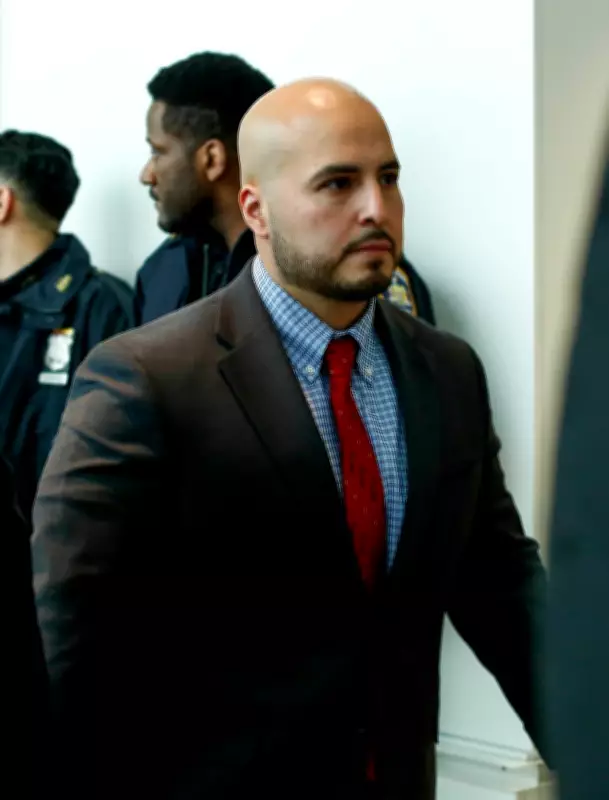
NYPD Officer Found Guilty in Fatal Cooler-Throwing Case
A New York City police officer has been convicted of manslaughter following a tragic incident where he threw a plastic cooler at a man fleeing on a motorized scooter, resulting in a fatal crash. The verdict was delivered at the Bronx Criminal Court, marking a significant legal outcome in a case that has drawn widespread attention to police conduct and accountability.
Details of the Incident and Trial
Officer Erik Duran was charged after an altercation in which he hurled a cooler at a scooter driver attempting to evade police. The impact caused the driver to lose control and crash, leading to his death. The trial, which concluded recently, featured testimonies and evidence highlighting the circumstances of the pursuit and the officer's actions.
Prosecutors argued that Duran's use of force was excessive and unjustified, directly contributing to the fatal outcome. The defense contended that the officer was acting in the line of duty, but the jury ultimately sided with the prosecution, finding Duran guilty of manslaughter.

Broader Implications and Reactions
This conviction underscores ongoing debates about police tactics and the use of force in urban settings. Legal experts note that such cases are rare but can set precedents for how similar incidents are handled in the future. Community advocates have expressed relief at the verdict, viewing it as a step toward justice and transparency in law enforcement.
The sentencing phase is yet to come, with Duran facing potential prison time. The case has also sparked discussions on training protocols for police officers, particularly in high-pressure situations involving pursuits.
Key Points from the Case:- The incident occurred during a police chase in the Bronx, New York.
- Officer Erik Duran was convicted of manslaughter, not a more severe charge like murder.
- The trial highlighted issues of police accountability and public safety.
- This is one of few cases where a police officer has been found guilty in a death related to non-firearm force.
As the legal process continues, this case serves as a poignant reminder of the complexities in balancing law enforcement duties with civilian protections. It may influence future policies and training within police departments across North America.