Manitoba RCMP Cleared in High-Speed Crash Following Mass Stabbing Incident
The Manitoba Royal Canadian Mounted Police (RCMP) has been officially cleared of any wrongdoing by the provincial police watchdog following a serious vehicle crash that occurred during their response to a mass stabbing incident. The Independent Investigation Unit of Manitoba (IIU) concluded its investigation into the September 2025 crash, determining that no charges would be filed against the officers involved.
Chaotic Response to Violent Attack
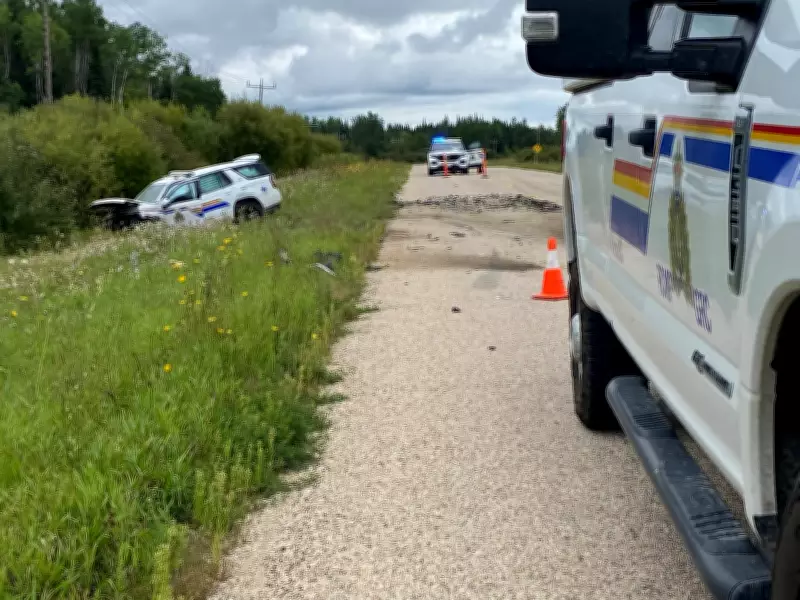
The incident unfolded on September 4, 2025, when RCMP officers were responding to reports of a mass stabbing in Hollow Water First Nation, located approximately 200 kilometers north of Winnipeg. During their emergency response, an RCMP vehicle was involved in a significant crash on Highway 304 while en route to the scene of the violent attack.
Photographic evidence from the scene showed substantial damage to the police vehicle, which had been traveling at high speed as part of the emergency response to what authorities described as a critical situation requiring immediate intervention. The crash occurred as officers were racing to reach the First Nation community where multiple stabbing victims had been reported.

Watchdog Investigation Findings
The Independent Investigation Unit, which examines all serious incidents involving police in Manitoba, conducted a thorough review of the circumstances surrounding the crash. Their investigation included:
- Examination of police vehicle data and speed records
- Review of emergency communications and dispatch logs
- Analysis of road conditions and weather at the time of the incident
- Interviews with responding officers and witnesses
The IIU determined that the officers were operating within their emergency response protocols and that the crash resulted from the extraordinary circumstances of responding to a mass casualty event rather than from negligence or misconduct.
Context of the Original Emergency
The mass stabbing that prompted the emergency response occurred in Hollow Water First Nation, an Anishinaabe community with approximately 1,200 residents. Details about the stabbing incident itself remain limited due to ongoing investigations and privacy considerations, but authorities confirmed it was a serious violent event requiring immediate police and medical response.
Highway 304, where the crash occurred, serves as a primary access route to several First Nations communities in the region. The remote location and limited medical facilities in the area typically require rapid response times from emergency services based in larger centers.
Broader Implications for Police Response Protocols
This incident highlights the complex balance police must maintain between rapid emergency response and public safety considerations. While the IIU cleared the officers in this specific case, the crash has prompted discussions about:
- Emergency vehicle operation protocols in remote areas
- Risk assessment during high-speed responses to violent incidents
- Training for officers responding to mass casualty events in First Nations communities
- Vehicle safety standards for police cruisers used in rural and remote policing
The Manitoba RCMP has acknowledged the IIU's findings and stated that they continuously review their emergency response procedures to ensure both effective policing and community safety. No injuries to civilians were reported in the crash, though the police vehicle sustained significant damage that required it to be removed from service.