Russia-Aligned Radev Poised to Secure Victory in Bulgarian Election
Former President Rumen Radev, a prominent figure who has consistently opposed sanctions against Russia and military aid for Ukraine, is on track to win Bulgaria's eighth general election since 2021. According to an exit poll conducted by Alpha Research and published by the BNT public TV channel, Radev's Progressive Bulgaria party is expected to secure approximately 38 percent of the vote in Sunday's ballot. This result could potentially break years of political gridlock that have plagued the European Union's poorest member state.
Projected Seat Distribution and Coalition Challenges
The Alpha Research poll projects that Radev's party would gain around 105 seats in the 240-member parliament, providing a significant lead over his main challenger. The Gerb party, led by longtime Prime Minister Boyko Borissov, is running second with about 16 percent of the vote, which would translate to approximately 46 seats. Despite this substantial margin of victory, Radev faces potentially complex negotiations to form a governing majority, a hurdle that has proven insurmountable for winners of recent elections.
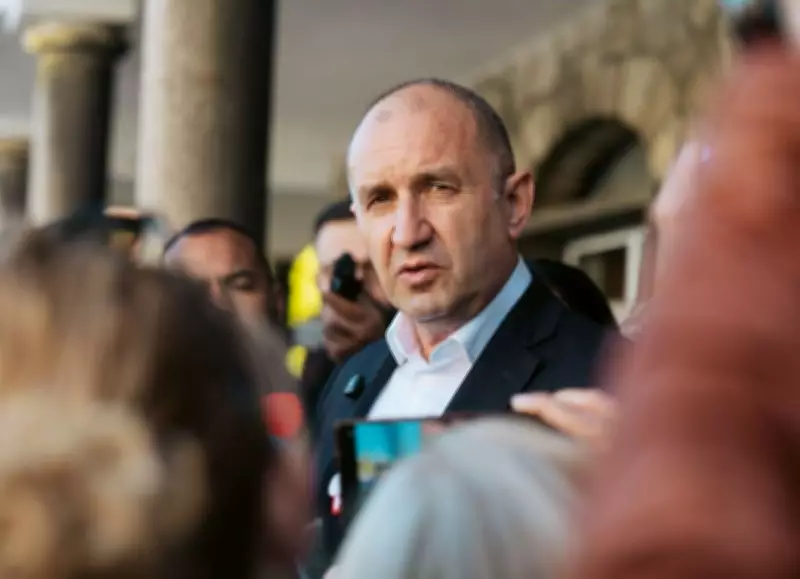
Radev emphasized the importance of stability when speaking to reporters after casting his vote on Sunday. "For me, the most important thing is to form a regular, stable government," he stated. "Going to elections again is not an option." The former air force general, who received training in the United States, has managed to re-engage disillusioned voters, with turnout reaching around 47 percent by 7 p.m. local time, compared to just 38 percent in the previous election held in October 2024.

Potential Coalition Partners and Political Landscape
The distribution of parliamentary seats could still shift depending on the performance of the Socialists, who represent Radev's most likely coalition partner. The Alpha Research survey places the Socialists at 4.1 percent, just above the four percent threshold required to enter parliament. If they fall below this critical mark after votes from outside Bulgaria are counted, where the party has weaker support, Radev's path to forming a government could become even more complicated.
Other significant parties in the election include a pro-EU, anti-corruption alliance projected to win about 14 percent of the vote and 40 seats, placing third. While Radev has regularly criticized this alliance for supporting Borissov's various administrations, he has not completely ruled out a potential coalition with the group. The Movement for Rights and Freedoms, led by U.S.-sanctioned mogul Delyan Peevski, is expected to secure about 8.4 percent of the vote and 24 seats. Radev has campaigned vigorously against Peevski's enduring influence in Bulgarian politics and has firmly rejected any alliance with his party.
Historical Context and Political Transformation
Bulgaria has been trapped in political deadlock since anti-corruption protests five years ago ended Borissov's dominance of the country's political landscape. Radev, who resigned as head of state in January to enter the race after another wave of protests brought down a fragile coalition led by Borissov's Gerb, has emerged as the nation's most popular politician. Vowing to combat what he describes as a corrupt elite, Radev has successfully garnered support from across the political spectrum, including many of his former rivals.
The potential victory of Radev's Progressive Bulgaria party represents a significant shift in Bulgarian politics, with implications for both domestic governance and international relations. As the country awaits final election results, the focus remains on whether Radev can navigate the complex coalition-building process to establish a stable government and finally break the cycle of political instability that has hindered Bulgaria's progress for years.