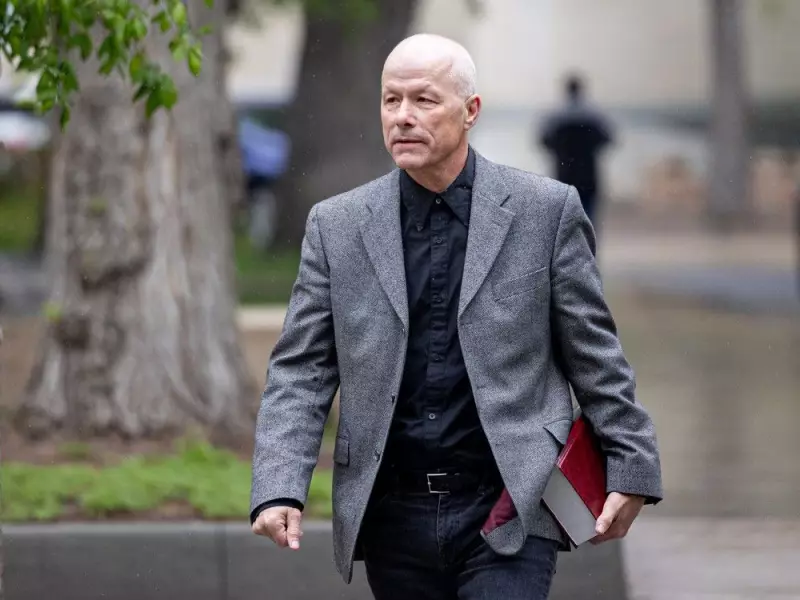
A Saskatoon judge has sentenced a former private Christian school principal to a six-month conditional sentence in the community for an assault with a weapon that occurred two decades ago.
Judge Cites High Moral Culpability in Sentencing
In a decision delivered Thursday morning, Justice Natasha Crooks of the Saskatoon Court of King's Bench ruled that Duff Arthur Friesen will serve his sentence under community conditions. Justice Crooks explicitly rejected a defence request for a conditional discharge, which would have spared the 68-year-old a criminal record.
In her written decision, Justice Crooks stated, "I find Mr. Friesen’s moral culpability to be high." She pointed to several aggravating factors, including the young age of the victim at the time and the significant position of authority Friesen held as the school's principal.

Historical Assault at Private Christian School
The offences took place during the 2003-2004 school year when Friesen was the principal of Christian Centre Academy in Saskatoon. The institution has undergone two name changes since then, first to Legacy Christian Academy and is currently known as Valour Academy.
The school maintains close ties with Encounter Church, previously called Mile Two Church and Saskatoon Christian Centre. A jury convicted Friesen last May on one count of assaulting a former student by striking them with a wooden paddle. He was acquitted on three additional assault charges.
Community Sentence Deemed Appropriate
While the Crown prosecutor had sought an eight-month jail sentence followed by probation, the court determined a community sentence was suitable. Justice Crooks noted that Friesen is considered a low risk to reoffend, has no prior criminal record, and adhered to all his release conditions.
"I am satisfied that serving this sentence in the community will not endanger the public," Crooks wrote. The same reasoning led the judge to decide against imposing a probation period after the sentence, deeming it unnecessary for rehabilitation.
Due to a court-ordered publication ban intended to protect the integrity of a second trial scheduled for September 2026, specific evidence and victim impact statements from the proceedings cannot be reported. The ban also protects the identity of the victim.