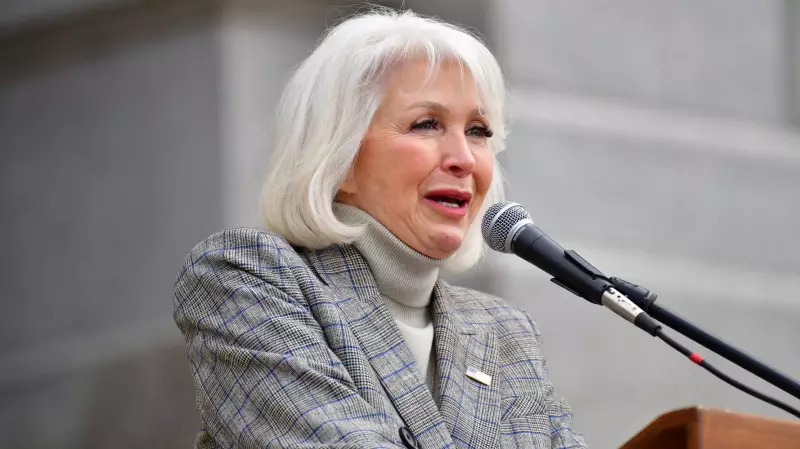
Former Colorado elections clerk Tina Peters has launched a novel legal bid, asking a state appeals court to recognize a pardon from former President Donald Trump as valid for her state-level convictions. Her lawyers argue the pardon should immediately release her from prison.
Legal Battle Over Presidential Pardon Power
In a motion filed on Tuesday, Peters' legal team contended that the Colorado Court of Appeals no longer has jurisdiction over her case due to the pardon issued by Trump on December 5. They have requested her immediate release from state prison.
Peters, the former Mesa County clerk, was convicted for her role in orchestrating a data breach scheme. This plan was fueled by false claims of voting machine fraud during the 2020 presidential election. Legal experts widely note that a U.S. president's pardon power does not extend to state crimes, a point central to the dispute.

Historical Precedent and State's Response
To support their argument, Peters' lawyers cited a historical example from 1795. They noted that President George Washington issued pardons to individuals convicted of both state and federal crimes following the Whiskey Rebellion. They urged the court to rule quickly on the matter.
The appeals court has scheduled a hearing for January 14 to consider arguments in Peters' appeal of her conviction. On Wednesday, the court allowed lawyers from the Colorado Attorney General's office, who are defending the conviction, to file a response by January 8.
Colorado Attorney General Phil Weiser's office declined to comment on the latest filing. However, Weiser was unequivocal when Trump announced the pardon on December 11. He stated, "The idea that a president could pardon someone tried and convicted in state court has no precedent in American law, would be an outrageous departure from what our constitution requires, and will not hold up."
Potential Path to the Supreme Court and Prison Standoff
If the Colorado appeals court rejects the validity of the pardon, one of Peters' attorneys, Peter Ticktin, indicated they could appeal that specific issue to the U.S. Supreme Court. This would happen concurrently with the state court's ongoing review of her conviction appeal.
Another attorney for Peters, John Case, has already attempted to secure her release through the state prison system using Trump's pardon, according to an email included in the court filings. The state refused the request. Earlier in December, Peters also lost a separate bid in federal court to be released while her state appeal is pending.
Peters was sentenced in October 2024 to nine years in prison. At sentencing, Judge Matthew Barrett called her a "charlatan" and said she posed a danger to the community for spreading lies that undermined democracy. Peters remained unapologetic, insisting her actions were aimed at uprooting what she believed was fraud.
Her convictions stemmed from allowing a man, who was affiliated with MyPillow CEO Mike Lindell, to misuse a security card to access the election system. She was also found guilty of being deceptive about the man's identity.