Alberta's Justice System Confronts Unprecedented Political Pressure
In a remarkable display of concern, the chief justices of all three levels of Alberta courts took the extraordinary step in late January of issuing a public statement defending the importance of an independent judiciary in a democratic society. This unprecedented action came as Alberta Premier Danielle Smith publicly questioned judicial authority, suggesting that judicial decisions lack democratic legitimacy because judges are not elected officials.
Government Actions Spark Widespread Concern
The situation escalated when Premier Smith threatened to withhold funding for new judicial appointments unless the federal government granted Alberta greater influence over the judicial appointment process. This written threat to Prime Minister Mark Carney represents a direct challenge to established constitutional norms and the separation of powers that underpin Canada's democratic system.
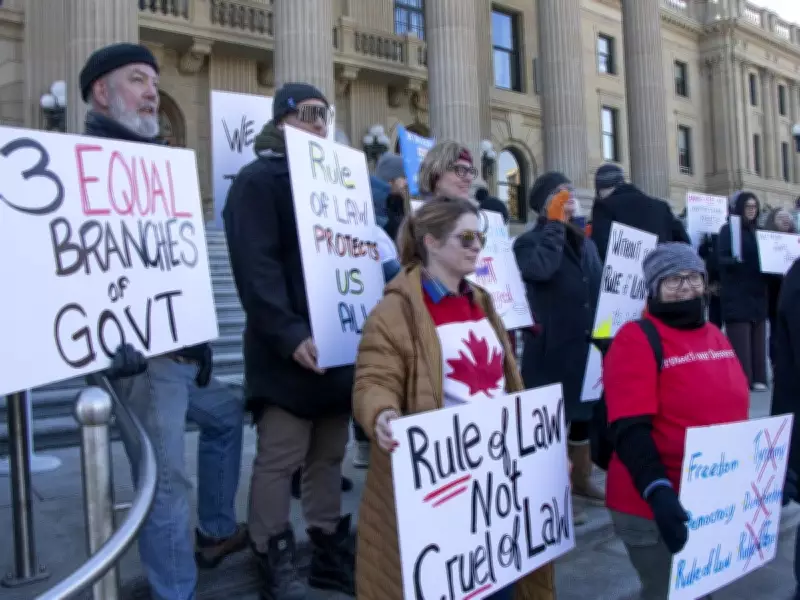
Legal professionals across Alberta have responded with alarm to these developments. A demonstration took place on the steps of the legislature, where concerned citizens and legal experts gathered to protest what they perceive as attacks on the rule of law. The Canadian Bar Association has also intervened, sending a formal letter urging the premier to respect the non-partisan nature of judicial appointments and maintain the independence of the courts.

Historical Context and Political Shifts
The current crisis has roots in recent political transformations within Alberta. Premier Smith assumed leadership following Jason Kenney's resignation, which occurred amid backlash within the United Conservative Party over COVID-19 public health measures. Smith's successful campaign centered on defending Alberta from perceived federal overreach, setting the stage for confrontational governance approaches.
The Alberta Sovereignty within a United Canada Act, introduced as the first legislation under Smith's premiership, represents a significant escalation in provincial-federal tensions. This controversial legislation purports to grant Alberta the authority to refuse enforcement of federal laws deemed to intrude on provincial jurisdiction, directly challenging established constitutional principles and judicial authority.
Broader Societal Impacts and Concerns
Legal experts point to the COVID-19 pandemic as a contributing factor to the current situation. The extensive use of emergency powers during the health crisis normalized executive authority in ways that some argue stretched democratic principles to their limits. These measures created societal divisions and eroded trust in democratic institutions, creating fertile ground for populist political approaches that challenge traditional governance structures.
The cumulative effect of these developments has created what legal scholars describe as an authoritarian-like approach to governance within Alberta's democratic framework. The attacks on judicial independence extend beyond rhetoric to concrete actions, including attempts to insulate the government from court accountability and the withholding of funding from organizations that promote the rule of law and public legal assistance.
Looking Forward: Implications for Democracy
The situation in Alberta raises fundamental questions about the future of democratic governance in Canada. When jurists feel compelled to publicly defend the independence of the justice system, it signals a breakdown in the constitutional checks and balances that protect democratic principles. The ongoing tensions between provincial authorities and judicial institutions threaten to undermine public confidence in the fairness and impartiality of Alberta's legal system.
As these conflicts continue to unfold, legal experts warn that the erosion of judicial independence could have far-reaching consequences for individual rights, constitutional protections, and the overall health of Alberta's democracy. The coming months will likely see continued debate and potential legal challenges as various stakeholders seek to defend the principles of judicial independence and the rule of law against what they perceive as unprecedented political pressure.