Illinois Democratic Primaries Highlight Complex Role of Big Money in Politics
The recent Democratic primaries in Illinois served as a vivid showcase of the intricate dynamics between financial resources and electoral outcomes, underscoring both the formidable influence and the surprising limitations of big money in modern political campaigns. This analysis delves into key races where massive spending by candidates and outside groups yielded mixed results, revealing that while money can shape narratives, it does not always dictate victory.
Financial Advantages and Electoral Realities
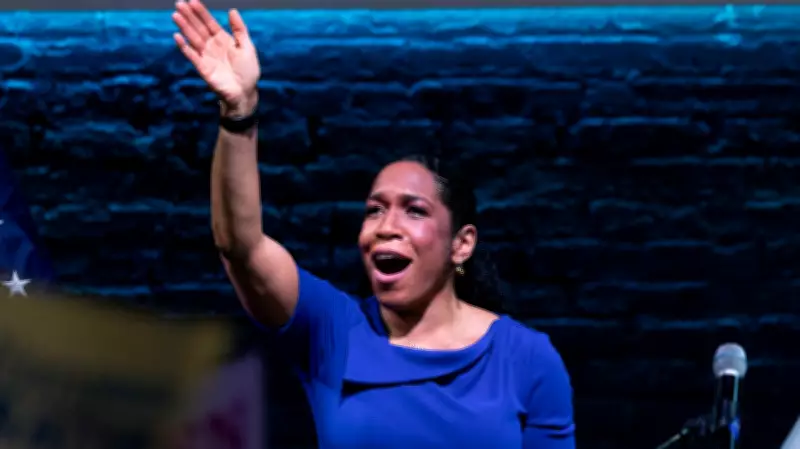
In the Senate primary, Representative Raja Krishnamoorthi entered the race with a substantial war chest of $19 million, allowing him to flood airwaves with advertisements throughout the summer and fall. However, as the election neared and voters began paying closer attention, his financial edge diminished significantly. Despite his continuous presence in downstate television markets, Lieutenant Governor Juliana Stratton managed to hold her ground, even in areas where she and her allies had not purchased a single commercial. This scenario illustrates that while money can amplify a candidate's message, it cannot substitute for voter engagement and strategic campaigning.
Conversely, Stratton's own fundraising efforts were notably lackluster, with only $4 million raised over the course of the campaign. Her ability to counteract late attacks from the cryptocurrency industry-backed super PAC Fairshake was largely dependent on a $5 million infusion from Governor JB Pritzker, channeled through supportive super PACs. This highlights a critical point: having the most money is not always essential, but having enough financial backing to mount a defense against well-funded opponents is crucial for survival in competitive races.

Outside Spending and Mixed Outcomes
Super PACs aligned with various interest groups, including cryptocurrency, artificial intelligence, and AIPAC, collectively poured over $35 million into four open Democratic House primaries in Chicago. The results were a patchwork of successes and failures. For instance, crypto groups successfully overwhelmed state Senator Robert Peters in one district but failed to unseat Representative La Shawn Ford in another. An AI group, backed by OpenAI to oppose regulation, unsuccessfully attempted to boost former Representative Jesse Jackson, Jr.'s comeback bid.
AIPAC experienced notable setbacks in the 9th District, where its spending became a central campaign issue, leading to Evanston Mayor Daniel Biss's victory, and in the 7th District, where its endorsed candidate lost to Ford. However, AIPAC did secure a win by supporting Cook County Commissioner Donna Miller in the 2nd District. Additionally, moderate former Representative Melissa Bean's triumph in the 8th District represented a collective victory for AI, crypto, and AIPAC, all of which backed her campaign. This mixed record underscores that while outside money can influence outcomes, it is not a guaranteed path to electoral success.
Voter Confusion and Calls for Reform
The influx of big spending, often funneled through innocuous-sounding front groups, created confusion among voters and frustration among elected officials in Illinois. This environment may spur legislative action, as indicated by Representative Greg Casar of Texas, who noted that Democratic leaders are increasingly concerned about the scale of outside spending in primary races. Casar emphasized that what was once viewed as a problem primarily for progressives has now become a broader issue affecting all voters and Democrats, signaling a potential shift toward campaign finance reform.

Key Takeaways from the Primaries
- Good Sign for Senate Insurgency: Stratton's campaign, which avoided corporate PAC money and echoed themes of progressive insurgents, suggests a growing appetite for candidates who challenge establishment norms. Her refusal to support Senate Minority Leader Chuck Schumer's continued leadership aligns with similar stances by insurgent candidates in Michigan and Minnesota, pointing to a potential trend within the party.
- Advertisement for Ranked-Choice Voting: In races where winners secured less than 50% of the vote, such as the Senate and four House contests, the lack of majority support raises questions about electoral fairness. Ranked-choice voting or runoff systems could ensure that candidates elected in low-turnout primaries genuinely represent a majority of voters, addressing issues of vote-splitting and strategic voting.
- Lefty Rebrands: Interest groups attempted to rebrand moderate candidates as populist champions. For example, AIPAC-linked ads portrayed Melissa Bean as a supporter of the Affordable Care Act and Wall Street reform, glossing over her centrist record. This tactic reflects a recognition that voters are drawn to bold economic populism, even when promoted by corporate-funded entities.
In summary, the Illinois Democratic primaries offer a nuanced perspective on the role of money in politics. While financial resources can provide a significant advantage, they are not omnipotent. Voter attention, candidate positioning, and electoral systems play equally vital roles in determining outcomes, highlighting the need for ongoing scrutiny and potential reform in campaign finance practices.