The Tsleil-Waututh Nation has taken legal action to halt the Vancouver Fraser Port Authority from dredging the Second Narrows, a project intended to accommodate larger oil tankers transporting crude from the Trans Mountain pipeline. The North Shore First Nation filed an application in the Federal Court of Canada on Thursday seeking to overturn the permit granted last month, arguing that the approval process was rushed and that their concerns were disregarded.
Nation claims inadequate consultation and environmental risks
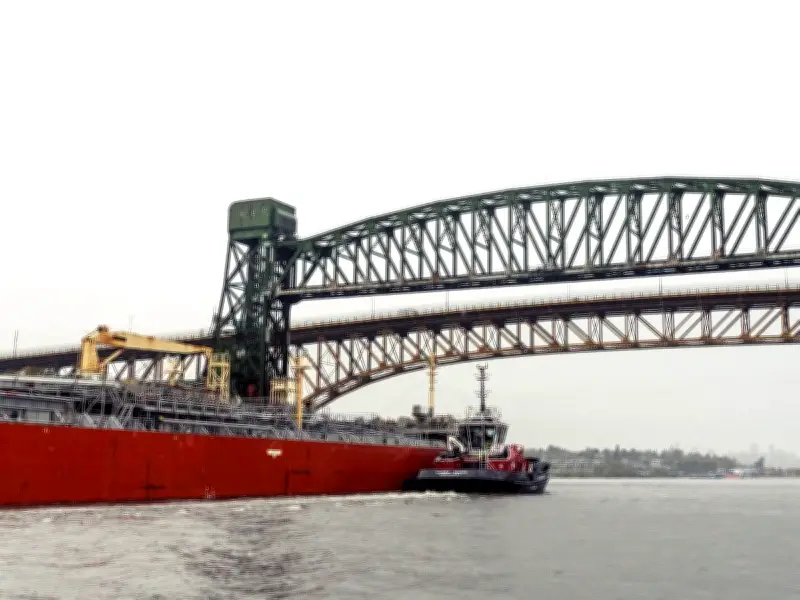
In a news release, the Tsleil-Waututh Nation stated that Canada failed to conduct meaningful consultation before issuing the permit. The nation also contends that the port authority's determination that the dredging would not have a significant environmental impact was unreasonable. The dredging site lies beneath the Ironworkers Memorial Bridge, an area where the nation has been engaged in a multi-year restoration of tidal flats to the north of the channel.
Chief Justin George emphasized the nation's stewardship obligations. “While Tsleil-Waututh understands the proposed dredge is an important step for Canada’s international trade objectives, including increasing the amount of oil moving through the Inlet from Westridge Marine Terminal, the approval process has been rushed and has not addressed any of Tsleil-Waututh Nation’s concerns about marine shipping impacts,” he said. He added, “Tsleil-Waututh has a sacred stewardship obligation, a responsibility to care for our lands, air and waters. While we attempted to resolve these outstanding issues in good faith, our concerns were ignored, leaving us no choice but to go to court to protect our territory and interests.”

Dredging aims to boost oil tanker capacity
The dredging project is designed to deepen the Second Narrows channel, allowing Aframax oil tankers to load more crude at the Westridge Marine Terminal. Currently, these tankers can only fill to about 80% of their capacity due to depth restrictions. Fuller tankers would enhance the competitiveness of Canadian crude exports from British Columbia, reducing shipping costs to Asian markets. The work is scheduled for later this year.
The Trans Mountain pipeline, owned by the federal government, transports approximately 890,000 barrels of crude per day from northern Alberta to the coast. Its capacity tripled two years ago following a $34 billion expansion that added a second pipeline. The dredging is part of a broader plan to increase the system's capacity to nearly 1.2 million barrels per day by 2029. Additionally, Trans Mountain has been tasked by Canadian and Alberta governments to build a third pipeline along a similar route to a new deep-water port in Delta, bypassing the Second Narrows.
The Vancouver Fraser Port Authority and Trans Mountain did not immediately respond to requests for comment.