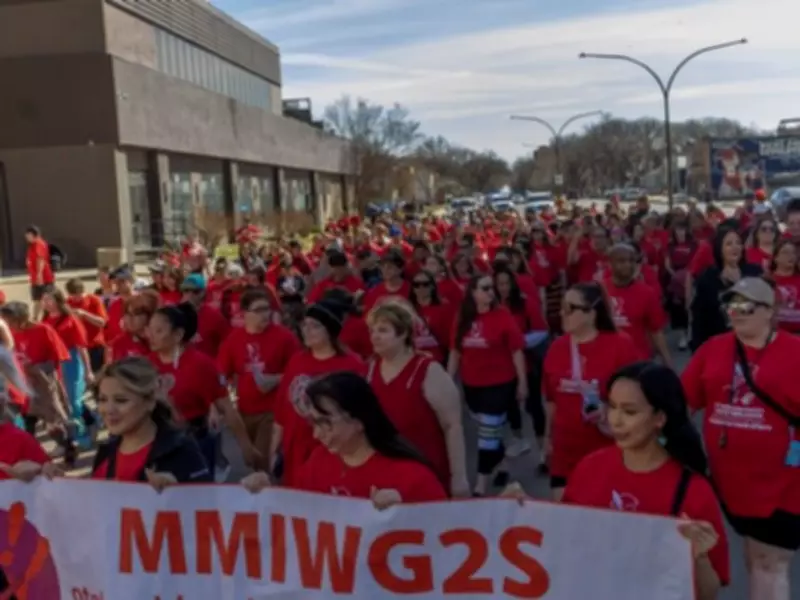
The Nēwo-Yōtina Friendship Centre held its annual MMIWG2S+ Gathering and Smudge Walk in downtown Regina on Friday, marking Red Dress Day and honouring the spirits of missing and murdered Indigenous women, girls, and two-spirit individuals.
A Personal Journey of Remembrance
kīwetīn-noodīn kā-nīpawit, also known as Shylo Stevenson, walked with the memory of a close family member whose remains were found in Edmonton two years ago. He reflected on the pain that families carry daily. “I was able to walk in that spirit of that family,” he said during the event. “Many people, they only think about it one time of the year. But many people like us have to live with it all year round.”
kīwetīn-noodīn kā-nīpawit, a member of the Keeseekoose First Nation, emphasized that Red Dress Day events are not just symbolic but deeply personal for those who have lost loved ones. The walk serves as a reminder of the ongoing crisis affecting Indigenous communities across Canada.

Red Dresses as Symbols of Loss
Red dresses and shirts, worn by many of the approximately 100 participants, symbolize the lives of those who have been taken. The gathering began with a smudge ceremony, a traditional cleansing ritual, before the group proceeded through the streets of Regina. The event aimed to raise awareness about the disproportionate violence faced by Indigenous women, girls, and two-spirit people.
Teresa Innis, executive director of the Nēwo-Yōtina Friendship Centre, spoke about the organization’s daily work with vulnerable individuals. “It is one day for the smudge walk for us, but these are things that we live every day where we’re working with women,” she said. Innis, who is Métis, expressed hope that future generations will not experience such violence, but she remains concerned by statistical trends.
Alarming Statistics
According to 2024 data from Statistics Canada, the homicide rate of Indigenous women and girls is over eight times higher than that of their non-Indigenous counterparts—6.74 per 100,000 population compared to 0.8 per 100,000. This represents an increase from 2014, when the rate was five times higher. Innis noted that at last year’s event, when asked how many people had a missing or murdered loved one, nearly every hand was raised. “One of our struggles is that when we’re looking at these statistics, to remember that there are families behind those statistics, there’s individuals behind those statistics, there’s stories, there’s loved ones,” she said.
Calls for Action
Nearly seven years have passed since the National Inquiry into Missing and Murdered Indigenous Women and Girls released its final report and calls for justice. Advocates argue that Canada has not done enough to address the crisis. Jessica Gordon, a member of Pasqua First Nation and senior director of decolonization, equity, diversity and inclusion at YWCA Regina, stated, “There’s no dedicated legislation. There’s only policy promises.” The event underscored the urgent need for systemic change to protect Indigenous women, girls, and two-spirit individuals.