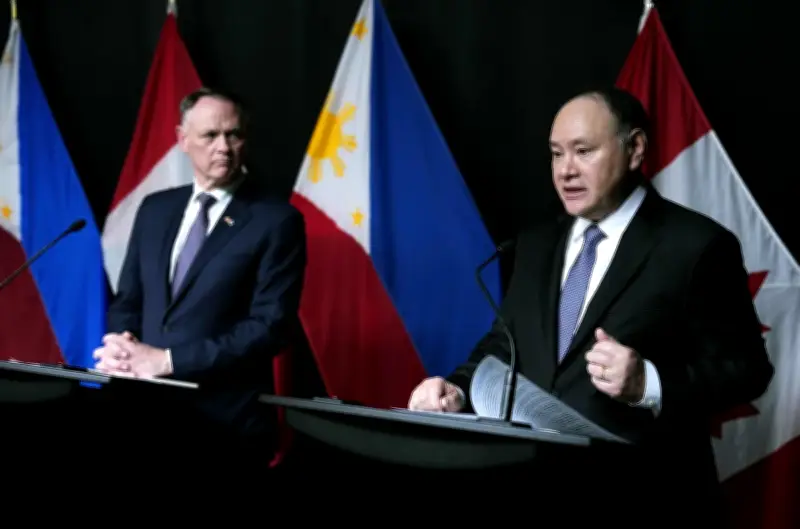
The Philippines is actively pursuing closer defence ties with Canada as it continues to square off with China over territorial disputes in the South China Sea. The move comes amid heightened tensions in the region, with Manila seeking to diversify its security partnerships beyond traditional allies like the United States.
Diplomatic Efforts Underway
Philippine officials have engaged in multiple rounds of talks with Canadian counterparts, focusing on potential defence agreements, joint military exercises, and capacity-building initiatives. Canada has expressed interest in enhancing its presence in the Indo-Pacific, aligning with its recent defence policy update that prioritizes the region.
According to a statement from the Philippine Department of Foreign Affairs, the two countries are exploring a memorandum of understanding on defence cooperation that could cover areas such as maritime security, cyber defence, and disaster response. The talks are part of a broader strategy by Manila to strengthen ties with like-minded nations that share concerns about China's assertive behavior in the South China Sea.

Canada's Strategic Shift
Canada's Indo-Pacific strategy, released in 2022, identifies the region as a key priority for trade, security, and diplomatic engagement. The strategy includes commitments to increase naval deployments, expand military partnerships, and support rules-based order in the region. Jeff Nankivell, CEO of the Asia Pacific Foundation of Canada, described it as 'critical' for Canada to develop trade relations with Asia amid ongoing CUSMA negotiations.
Canada has already taken steps to bolster its military presence in the Indo-Pacific, including sending naval vessels for exercises and patrols. The Royal Canadian Navy has conducted joint operations with allies such as Japan, Australia, and the United States, and has expressed willingness to work with the Philippines.
China's Response
China has repeatedly criticized external powers for interfering in the South China Sea disputes, which involve competing claims by Brunei, Malaysia, the Philippines, Taiwan, and Vietnam. Beijing claims sovereignty over most of the waterway and has built artificial islands with military facilities, drawing condemnation from the Philippines and other claimants.
In response to the Philippines' outreach to Canada, Chinese foreign ministry spokespersons have urged Manila to avoid 'militarizing' the region and to resolve disputes through bilateral negotiations. China has also stepped up its own military activities in the area, including large-scale exercises and patrols by its coast guard and navy.
Implications for Regional Security
Analysts say that closer defence ties between the Philippines and Canada could contribute to a more balanced security architecture in the Indo-Pacific, reducing the region's reliance on any single power. The partnership could also provide the Philippines with access to Canadian expertise in areas such as maritime domain awareness and search and rescue operations.
However, some experts caution that Canada's limited military resources may constrain its ability to make significant contributions. The Canadian Armed Forces are currently facing personnel shortages and equipment obsolescence, which could affect the pace and scale of cooperation.
Next Steps
Both sides are expected to continue negotiations in the coming months, with an initial agreement possibly being signed by the end of 2026. The Philippine Senate would need to ratify any formal defence pact, a process that could take up to a year.
The development comes as Canada also seeks to strengthen economic ties with the Philippines, a fast-growing economy in Southeast Asia. Bilateral trade between the two countries reached $2.5 billion in 2025, with potential for growth in sectors such as agriculture, technology, and renewable energy.