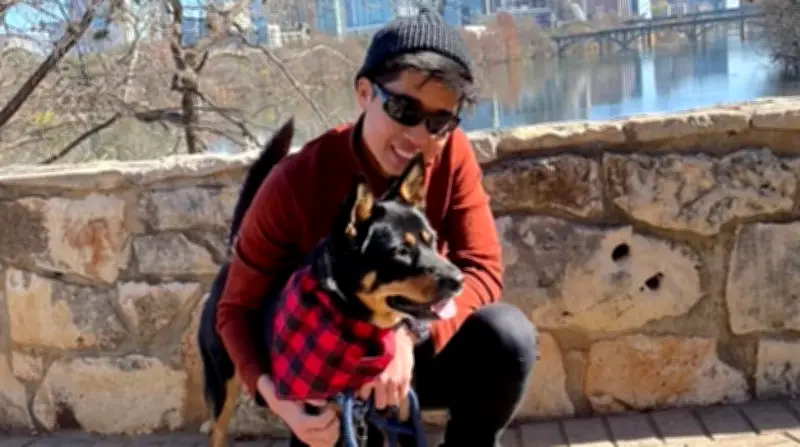
On an ordinary Friday afternoon, V. Jo Hsu, a Taiwanese American transmasculine writer and professor, was parking at a T-Mobile in Austin, Texas, when a white woman in an SUV began screaming at them. The woman accused Hsu of being a bad driver, repeatedly calling them “fucking tiny” and flipping them off. For Hsu, who lives with myalgic encephalomyelitis/chronic fatigue syndrome (ME/CFS), the confrontation triggered a “crash”—a symptom flare caused by physical or emotional stress. The incident, they write, reveals a broader pattern of scapegoating marginalized communities for societal pain.
A Trigger for Chronic Illness
ME/CFS has no cure or approved treatment, so Hsu relies on “pacing” to avoid exceeding their energy capacity. But factors like writing deadlines, drug shortages, and strangers’ aggression are beyond control. The woman’s yelling and horn honking caused muscle weakness, lightheadedness, cognitive difficulty, and days of full-body aches and digestive dysfunction. Hsu’s sight and hearing became hypersensitive: “each glimmer of light is a bonfire,” they write. “This woman’s voice was a bludgeon.”
Racism, Transphobia, and Ableism
The woman’s taunt—“Is it because you’re so small?”—summoned a lifetime of racism, transphobia, and ableism. Hsu says they saw themselves “as weak, passive and a receptacle for her own bad feelings.” The woman then pulled out her cell phone, pointing the camera at Hsu as if expecting aggression. “If I matched her tone, I would fulfill the role she had laid out for me,” Hsu writes. “I would become the menace in the story of her victimization.” Hsu quietly gathered their things; the woman eventually drove away after another car honked at her.

Historical Patterns of Scapegoating
Hsu connects this encounter to the surge in anti-Asian violence during the COVID-19 pandemic. In 2020, a half-empty water bottle was thrown at them while someone shouted “China virus.” In March 2020, Jose Gomez III attacked a Burmese family in a Sam’s Club in west Texas, stabbing a 6-year-old boy in the face. Gomez later admitted he wanted to kill the child, whom he blamed for the pandemic. He was sentenced to 25 years in prison in August 2022. “He looked like my cousins, like my childhood friends, like he could have been me,” Hsu writes.
Anti-LGBTQ Violence
Hsu notes that attacks on LGBTQ safe havens, like the 2022 Colorado Springs nightclub shooting that killed five and wounded 19, are inseparable from hostile political climates. “I sometimes wonder what it would be like to live without others hating me for breathing,” they write. “I wonder about the lasting damage when one person’s suffering becomes another’s burden.”
The Cost of Displaced Blame
Hsu argues that scapegoating marginalized groups—whether Asian Americans during COVID-19, LGBTQ people during Cold War anxieties, or Jewish people through antisemitic conspiracy theories—does not solve problems but multiplies suffering. “Displacing blame onto already-marginalized others only multiplied suffering,” they write. “We need responses to pain that are not about inflicting more harm, but about genuine healing.”