Inuit Leadership Questions Alignment with Federal Priorities Under Carney Government
The president of Inuit Tapiriit Kanatami (ITK), Natan Obed, has publicly expressed significant uncertainty regarding where Inuit communities fit into Prime Minister Mark Carney's evolving economic and national defence agendas. This sentiment emerges amidst ongoing high-level discussions between Inuit leadership and the federal government, including a notable meeting of the Inuit-Crown Partnership Committee held in Inuvik, Northwest Territories, in July 2025.
A Relationship in Focus Amidst Broader Policy Shifts
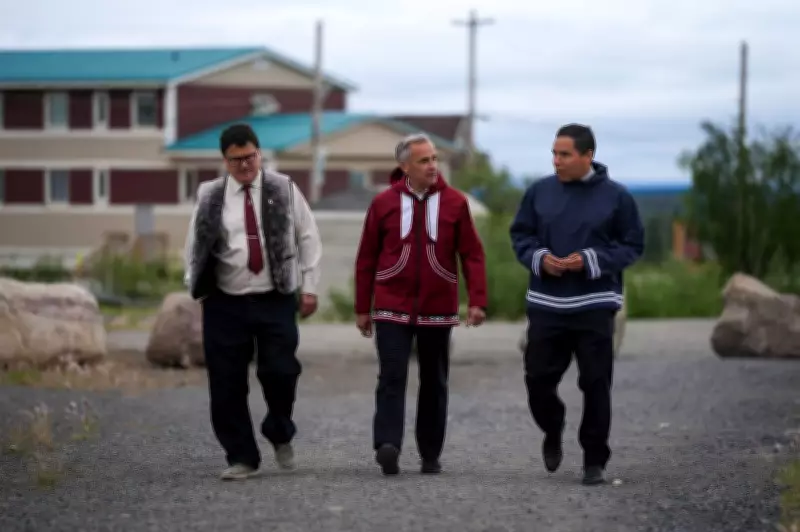
Prime Minister Carney was photographed walking with Inuit leaders Duane Smith, chair and CEO of the Inuvialuit Regional Corporation, and Natan Obed prior to that pivotal committee meeting. While the imagery suggests collaboration, the underlying narrative from ITK points to a more complex reality. There is a palpable concern that the specific needs, rights, and aspirations of Inuit peoples may not be fully integrated into the core frameworks of Canada's economic strategy and defence posture under the current administration.
This apprehension is not isolated but reflects deeper, historical challenges in federal-Indigenous relations. The economic agenda, which likely focuses on issues like sustainable development, trade, and innovation, must be reconciled with Inuit priorities such as sovereignty, land claims, and community-led economic development in the Arctic. Similarly, defence and security initiatives in the North, a region of critical strategic importance, directly impact Inuit homelands and require genuine partnership and consent.

Seeking Clarity and Concrete Inclusion
The statement from the ITK president underscores a call for clarity and substantive inclusion. It highlights a gap between symbolic gestures of partnership and the concrete implementation of policies that affect daily life in Inuit Nunangat. The question remains whether Carney's policy blueprints will allocate meaningful space for Inuit self-determination and address unique regional challenges, from infrastructure gaps to climate change impacts.
As the federal government charts its course on major files, the voice of ITK serves as a crucial reminder that nation-building and policy-making in Canada are incomplete without the full and equitable participation of its Indigenous peoples, particularly those with distinct constitutional rights and vast territorial homelands in the Arctic.