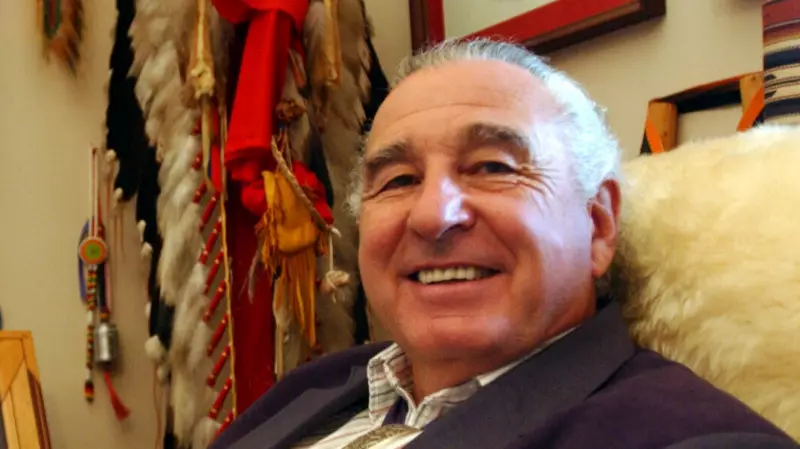
Ben Nighthorse Campbell, the former U.S. senator and representative from Colorado whose distinctive style and fierce advocacy for Native American issues left a lasting mark on Congress, has died. He was 92 years old.
His daughter, Shanan Campbell, confirmed to The Associated Press that he passed away on Tuesday of natural causes, surrounded by his family.
A Political Maverick with Deep Roots
Campbell, a member of the Northern Cheyenne tribe, was a unique and often unpredictable figure in Washington. Known for his cowboy boots, bolo ties, and ponytail, his personal style was as memorable as his political convictions. His advocacy spanned children's rights, organized labor, and fiscal conservatism.

He carried with him the painful history of his ancestors, who were among the more than 150 Native Americans killed in the Sand Creek Massacre of November 29, 1864, while camped under a flag of truce.
Campbell's political career began in the U.S. House of Representatives, where he served three terms starting in 1987. He then moved to the Senate, serving two terms from 1993 until his retirement in 2005.
Among his key legislative achievements was his role in sponsoring the bill that elevated Colorado's Great Sand Dunes National Monument to a national park.
An Unconventional Path and Party Switch
The motorcycle-riding lawmaker and cattle rancher was considered a maverick long before his dramatic party switch. In March 1995, angered by Senate Democrats for killing a balanced-budget amendment, he left the Democratic Party to become a Republican, a move that stunned his former colleagues and was hailed as a coup for the GOP.
"I get hammered from the extremes," he said at the time. "I'm always willing to listen ... but I just don't think you can be all things to all people, no matter which party you're in."
Despite the switch, Campbell insisted his core principles never changed. He maintained a strong voting record on labor and social issues, attributing his blend of social liberalism and fiscal conservatism to his life experiences.
He was a shoo-in for a third Senate term when he unexpectedly announced he would not run again in 2004, following a health scare. He cited a desire to spend more time with family and return to his passion: creating Native American jewelry, a craft that had made him wealthy and earned his work a place in the Smithsonian.
From Olympian to Accidental Politician
Campbell's journey to Congress was anything but planned. Born in Auburn, California, on April 13, 1933, he served in the U.S. Air Force during the Korean War, was captain of the U.S. judo team at the 1964 Olympics, and won a gold medal at the Pan American Games.
His political career began by chance in 1982. Bad weather grounded a flight to deliver his jewelry, and while killing time in Durango, Colorado, he attended a local Democratic meeting to give a speech for a friend. Party officials, seeking a candidate, recruited him on the spot. "Like a fish, I was hooked," he recalled.
He won that first race for the Colorado House of Representatives through relentless door-to-door campaigning and never lost an election again, ascending to the U.S. House and then the Senate.
In tributes, Colorado Senator John Hickenlooper called him "a master jeweler with a reputation far beyond the boundaries of Colorado," while Representative Diana DeGette said, "He was truly one of a kind."
Ben Nighthorse Campbell's life was a tapestry of service, cultural pride, and independent thought, leaving a complex and enduring legacy in American political and Indigenous history.