British Columbia Takes Legislative Step to Implement Historic K'ómoks Treaty
The government of British Columbia has introduced landmark legislation to implement a modern treaty with the K'ómoks First Nation, marking a significant milestone in Indigenous reconciliation efforts. This treaty represents the fifth modern treaty to be reached in the province and the first to reach this stage in over a decade.
Substantial Land and Financial Provisions
The comprehensive agreement will grant the K'ómoks First Nation ownership of more than 34 square kilometers of land on Vancouver Island, along with self-government authority over those lands and a substantial $56 million financial package. The land transfer includes provincial land, private land purchased by the province specifically for this purpose, and existing First Nation reserve lands.
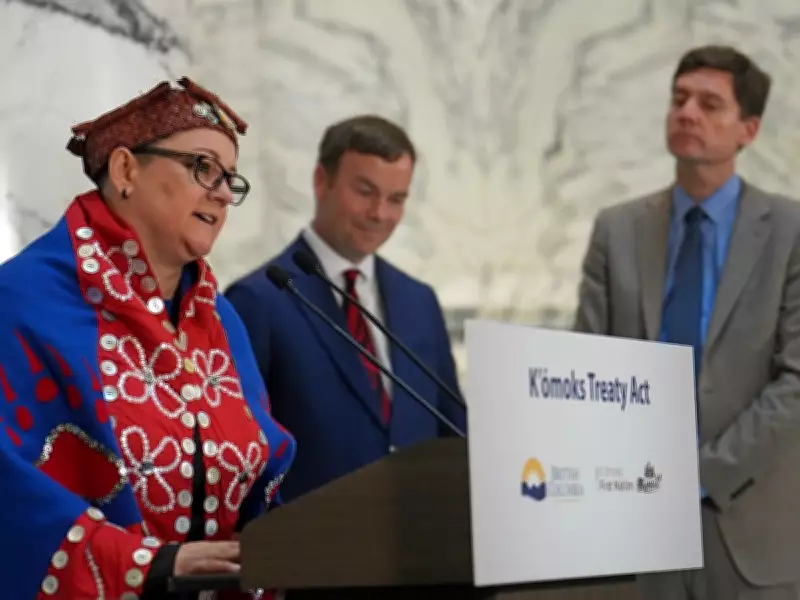
K'ómoks Chief Nicole Rempel emphasized the importance of this development during a ceremony with Premier David Eby just before the legislation was tabled. "Today is not the end of the journey," Rempel stated. "It's a meaningful step forward and an important step in implementation toward a future where our nation can fully realize its potential."

Three Decades of Negotiation Culminate in Legislative Action
This legislative action comes after more than thirty years of negotiations between the K'ómoks First Nation and government representatives. The K'ómoks community voted in favor of the treaty last year, and the federal government is expected to begin its ratification process this fall. If all proceeds according to plan, the treaty could become fully effective by 2028.
Premier Eby framed the treaty implementation as part of a broader commitment to cooperation with Indigenous communities across British Columbia. "There are those that would have us walk away from trying to find this path of co-operation," Eby remarked. "But we will continue as a government to prioritize that work with our Indigenous partners across the province, because when we do this work, we know that there are so many benefits for First Nations communities."
Broader Context of Indigenous Rights in British Columbia
The K'ómoks treaty advancement occurs against a complex backdrop of Indigenous rights discussions in the province. Premier Eby has faced criticism regarding the implementation of the United Nations Declaration on the Rights of Indigenous Peoples in British Columbia. Recently, Eby promised to suspend key sections of B.C.'s Declaration on the Rights of Indigenous Peoples Act for three years to address legal uncertainties, a decision that has generated concern among some First Nations leaders.
Additionally, public attention has increased regarding reconciliation efforts and legal questions surrounding Aboriginal land title following a significant 2025 B.C. Supreme Court decision. That ruling found that the Cowichan Tribes held Aboriginal title to land in the City of Richmond, including privately held properties—marking the first time a Canadian court included private land as part of such a remedy.
Continuing Treaty Progress Across the Province
In a related development, the B.C. government announced it will introduce legislation to implement another treaty with the Kitselas First Nation in the Terrace area. This parallel effort demonstrates the province's ongoing commitment to advancing multiple treaty processes simultaneously.
The K'ómoks First Nation, with 351 members, will gain sweeping powers over their lands once the treaty is fully implemented. This includes authority over governance, resource management, and cultural preservation within their territory—a significant step toward self-determination after generations of negotiation.