

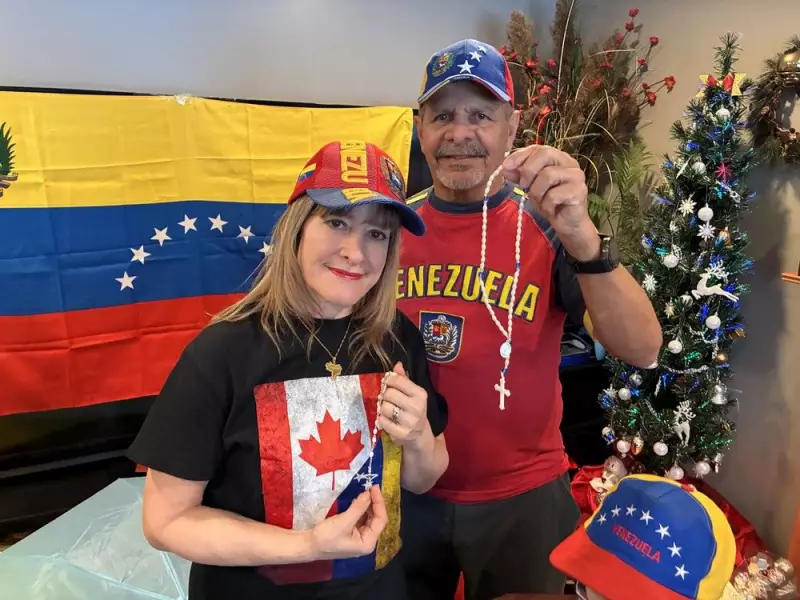
Members of Windsor-Essex's Venezuelan diaspora gathered in a Tecumseh home on Sunday, January 4, 2026, holding rosaries and praying for their homeland as it reeled from a dramatic U.S.-led military operation that forcibly removed President Nicolás Maduro from power.
Prayer and Uncertainty in Tecumseh
Nearly a dozen community members came together, united by anxiety and hope. The gathering's host, retired teacher Adelina Trottier, described the purpose of the meeting. "We are praying and hoping that whoever is going to lead the country will take into consideration that we are a democratic country," Trottier told the Windsor Star. "And that they need to respect what our country has been — always a free country."
The event followed the shocking events of early Saturday, January 3, when U.S. forces launched a large-scale attack in Venezuela. The operation resulted in the capture and removal of President Maduro and his wife, who were taken to a jail in New York City.

Mixed Emotions in the Diaspora
For Venezuelans living in Windsor, the news has triggered a complex wave of emotions. While many celebrated the end of Maduro's rule, which they view as a dictatorship, that hope is heavily tempered by fear of the unknown and potential for further violence.
"Now that he has been removed, we're concerned about the uncertainty around who will take his place in leading the country," explained Trottier, who spent most of her childhood in Venezuela. "There is a potential for chaos and further suffering."
Trottier blamed Maduro for the exodus of millions of Venezuelans, including those now in Canada. "That is why so many millions of Venezuelans have left the country and have migrated to everywhere in the world … not that they chose to leave, because they didn't want to leave their own country. It's an amazing, beautiful country that you would never want to leave," she said.
Concerns Over Foreign Intervention
The manner of Maduro's removal also sparked ambivalence within the local community. Luis Mendez, a Windsor gym owner originally from Venezuela, expressed conflicted feelings.
"It's great that they've been able to remove him from power right now," Mendez stated. "But at the same time, to take control of our country … and dictate what needs to happen there, that's not right."
The human cost of the military action was felt immediately by families still in Venezuela. Mendez relayed messages from his cousins and aunt living on the Venezuelan coast, who described being "very rattled, very afraid" during the bombings by fighter jets and helicopters. "It felt like the earth was shaking," they told him.
Adelina Trottier's Saturday was consumed by a "shower of messages" from terrified friends and family near the capital, Caracas. The overwhelming tone, she said, was one of sheer fear about what comes next for a nation already enduring profound hardship.
As the Windsor community continues to watch events unfold from thousands of kilometres away, their Sunday prayer circle embodied the diaspora's poignant reality: a deep longing for a free and peaceful Venezuela, coupled with profound anxiety about the turbulent path to get there.






