

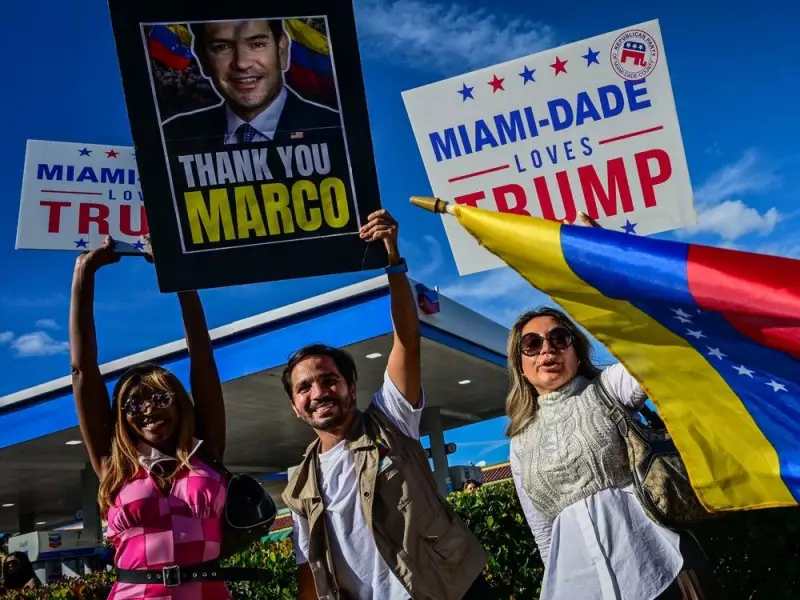
Venezuelan communities across the United States erupted in jubilant celebration over the weekend, following the forced removal and arrest of their country's long-time leader, President Nicolás Maduro, by U.S. military forces. The dramatic events have ignited a complex mix of hope, caution, and dreams of returning to a liberated homeland among the millions who fled economic and political turmoil.
Scenes of Jubilation from Florida to Spain
On Saturday, January 4, 2026, the news sparked immediate and emotional reactions. In Doral, Florida—a city west of Miami where over a third of residents are of Venezuelan descent—a crowd gathered outside El Arepazo restaurant. Wearing national soccer and baseball jerseys, they danced, embraced, and sang the Venezuelan national anthem. Caravans of cars honked incessantly as people waved both Venezuelan and U.S. flags, with occasional shouts of “Viva Trump” heard above the din.
The celebrations were not confined to Florida. In Katy, Texas, a hub for Venezuelan immigration near Houston, online groups like “Venezolanos en Katy” lit up with plans for a celebration along a thoroughfare lined with Venezuelan restaurants. Users shared cartoons and cheered for a “free Venezuela.” Thousands more gathered in Madrid’s Puerta del Sol, with almost 400,000 Venezuelans living in Spain chanting “freedom” and “the regime has fallen.”

Hope Tempered with Caution for the Future
For many, Maduro's downfall represents the fulfillment of a long-held dream. Johan Brito, a 30-year-old from Puerto Cabello who has been in the U.S. for five years, expressed the sentiment of many: “After so much suffering and what we’ve been through, including the rigged elections, we’re happy he was captured.” Switching to English, he added, “We can have better lives. I want to go back so bad because my family is there, I have two daughters there, I have everything there.”
Similarly, Juan Gutiérrez, 21, wearing a red Make America Great Again hat in Doral, stated, “I’m celebrating the freedom of my country. I’ve been alive 21 years and haven’t seen it until today.” He gave full credit to the U.S. government for its intervention.
However, this exultation stands in stark contrast to the scene in Caracas, where the streets were quiet on Saturday. Venezuelans lined up outside grocery stores and gas stations, gripped by uncertainty about their nation's immediate future following the overnight U.S. attack.
A Complex Relationship with U.S. Leadership
The diaspora's gratitude is directed squarely at President Donald Trump, despite his administration's complicated record regarding Venezuelan immigrants. Since taking office, Trump has scrapped humanitarian protections for many Venezuelans in the U.S. and frequently accused them of gang ties and criminality, fanning anti-immigrant sentiment.
Yet, his decisive action against Maduro has forged a powerful, if paradoxical, bond. The Trump administration has announced a plan to “run Venezuela” temporarily until a leadership transition can be organized, a move that brings its own set of questions and concerns. While celebrating Maduro's demise, many Venezuelans abroad are watching cautiously, aware that removing a dictator is only the first step on a long road to stability and democracy.
The overwhelming sentiment among the diaspora remains one of cautious optimism—a hope that this seismic shift will finally pave the way for them to rebuild their lives in their homeland.






