

President Donald Trump's administration is navigating a significant contradiction as it prepares to host the 2026 FIFA World Cup. While actively promoting a message of global welcome to soccer fans, the President continues to champion some of the most restrictive immigration policies in recent U.S. history.
A Warm Welcome in the Oval Office
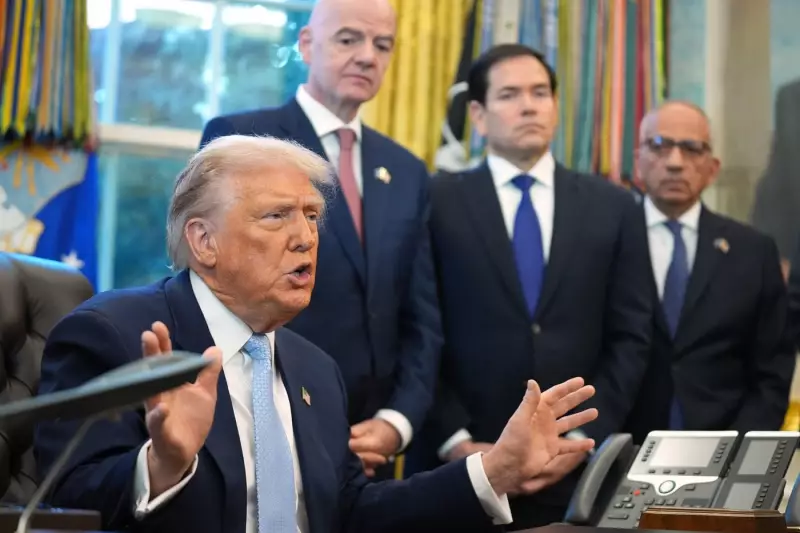
The tension between these two positions was on full display during a meeting in the Oval Office on Monday, November 17, 2025. President Trump convened with the White House task force dedicated to the upcoming World Cup. Key figures in attendance included FIFA President Gianni Infantino, U.S. Secretary of State Marco Rubio, and FIFA senior adviser Carlos Cordeiro.
The meeting's stated goal was to coordinate a successful and secure tournament, which will be co-hosted by the United States, Canada, and Mexico. The imagery from the Oval Office was one of international cooperation and sporting celebration, a stark contrast to the administration's typical rhetoric on border security and immigration enforcement.

The Core of the Contradiction
This collision of messages presents a complex challenge. On one hand, the Trump administration must ensure smooth entry for hundreds of thousands of international athletes, officials, sponsors, and fans for the World Cup. This requires efficient visa processing and a public relations campaign emphasizing hospitality.
On the other hand, President Trump has built a substantial part of his political identity on promises to tighten border controls, restrict immigration, and implement rigorous vetting procedures for foreign visitors. Policies such as travel bans from certain nations and the push for a border wall remain central to his platform, creating a potential logistical and ideological conflict.
Potential Implications and Reactions
Political analysts suggest this scenario will force the administration to make practical concessions to FIFA and the global sporting community. There is likely to be significant pressure to streamline visa applications for accredited individuals and to temporarily soften public messaging to avoid international criticism that could tarnish the event.
Critics are poised to highlight this dichotomy, arguing it reveals a prioritization of economic and prestige projects over consistent policy principles. Supporters, however, may frame it as a pragmatic approach to securing a beneficial event for the country while maintaining long-term security goals.
The situation underscores the often-complex reality of governing, where overarching ideological stances must sometimes be adjusted for specific, high-profile international commitments. How the Trump administration manages this balance in the lead-up to the 2026 World Cup will be closely watched by both allies and adversaries on the global stage.






