

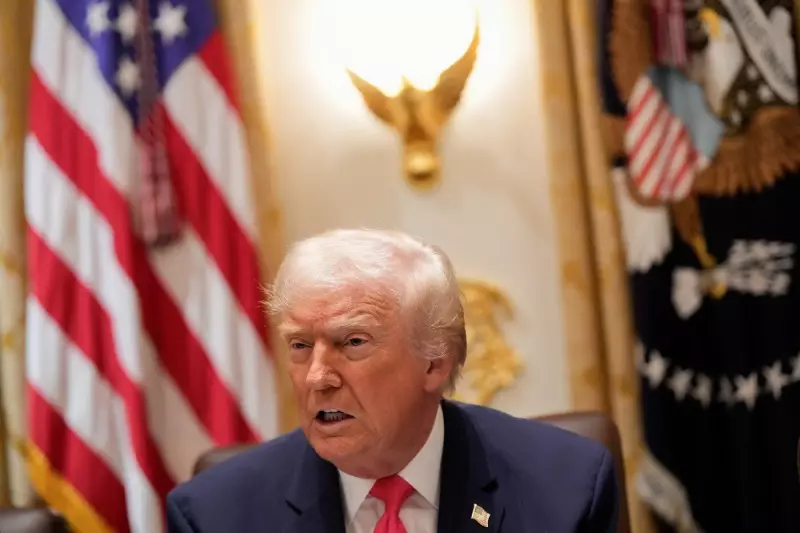
U.S. President Donald Trump has significantly escalated his use of anti-immigrant language, drawing sharp criticism after publicly referring to people from Somalia as "garbage" and stating he does not want them in the United States.
Details of the Controversial Remarks
The comments were made on December 05, 2025, as reported by The Associated Press. During the address, Trump explicitly attacked Somali refugees residing in the U.S., using derogatory language to describe them. The president's statement, "I don't want them in our country," marks a deeper foray into inflammatory rhetoric targeting specific nationalities and immigrant groups.
This incident is not an isolated one but represents a continuation of a pattern where the president has employed harsh and divisive language when discussing immigration policy. The direct targeting of a community from Somalia, a nation many refugees have fled due to conflict and instability, has ignited immediate backlash from advocacy groups and political opponents.

Context and Immediate Reactions
The remarks come amidst a broader North American news cycle that included significant domestic Canadian stories, from a 6.9% property tax hike decision by one city council to Alberta tabling a bill to deter long ballots. However, Trump's comments have captured significant cross-border attention due to their severity and potential to influence international discourse on refugees.
Political analysts and experts on rhetoric are urging caution, noting that such language from a world leader can legitimize xenophobia and negatively impact vulnerable communities. The statement is seen as part of the "America First" policy framework, which was also referenced in the context of new global health deals with Kenya.
Broader Implications and Analysis
This escalation in language has several potential consequences. Firstly, it risks further polarizing public opinion on immigration issues in the United States. Secondly, it may strain diplomatic relations and international cooperation on refugee resettlement programs. For the Somali diaspora in the U.S. and Canada, such rhetoric contributes to an atmosphere of fear and stigmatization.
While the news report primarily covers the factual account of the event, the underlying message points to a sustained political strategy centered on hardline immigration stances. The choice of words, moving beyond policy criticism to dehumanizing labels, represents a notable intensification that is likely to dominate political debate in the coming days.
The story was reported alongside other international developments, such as the upcoming 2026 World Cup draw in Washington where Trump is scheduled to meet other leaders, highlighting the juxtaposition of diplomatic engagements with divisive domestic rhetoric.






