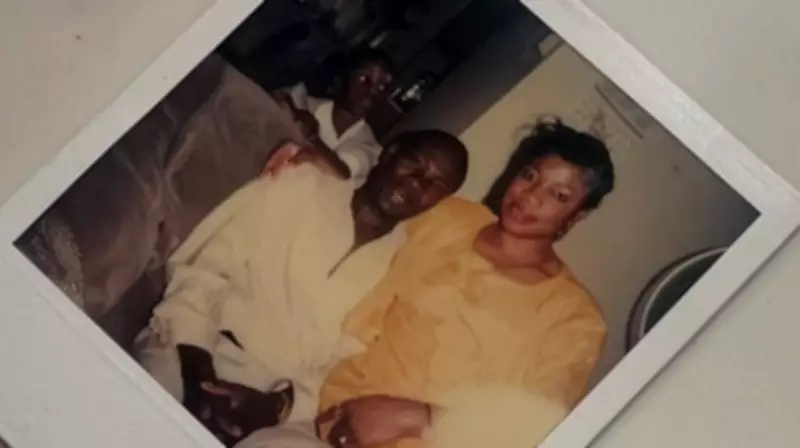
Julie M. Wenah was just seven years old when red and blue lights flashed across her living room walls in the middle of the night. Her father was taken away by Immigration and Customs Enforcement, then known as the Immigration and Naturalization Service in the early 1990s. He was arrested and deported for violating his student visa. His offense? Delivering newspapers before dawn to pay for university classes and support his family.
Her parents had immigrated to the United States in the early 1980s, eager to build a life together. Their one-bedroom apartment became a sanctuary for other Nigerian immigrants, known or unknown. Her mother often joked that her father was quick to share his salt and pepper shakers with strangers. One day, INS raided their home looking for someone else, a former guest. That person wasn't there, but her father's paycheck stub lay on the coffee table. An officer picked it up and questioned why he was working on a student visa. Despite his explanation that he was providing for his growing family, pointing to his visibly pregnant wife, the authorities did not relent.
What followed was a fractured family struggling for stability. After her father's deportation, her mother raised Julie and her baby sister alone, holding things together with faith and sheer will. She prayed over bills and worked double shifts. Across the ocean, her father raised them through letters, sending chemistry pamphlets, physics exams, and newspaper articles. It was his way of saying, I am still here and believe in your future, even if I am not there to see it unfold.

Twenty years passed. When her family petitioned for her father's return, the U.S. government approved his application within months. The system that tore their family apart over a newspaper delivery route now saw no reason to keep them apart. Her father eventually earned his MBA, and her mother graduated from cosmetology school.
A Broken System
What happened in their living room was not justice. It was a system that moved faster than its conscience. Each year, over half a million people are found to have violated visa terms. In 2025, thousands of student visas were revoked, many for infractions as minor as a speeding ticket. Nearly three out of four people in ICE detention have no criminal conviction. The system does not distinguish between a real threat and a father delivering newspapers. It simply moves, quickly.
And it is getting faster, not fairer. Last year, the federal government expanded expedited removals nationwide, fast-tracking deportations without hearings before a judge. What was once limited to individuals near the border within 14 days of arrival now reaches anyone, anywhere in the country, at any time.
Constitutional Guarantees
The Constitution demands otherwise. The Fifth Amendment promises that no person shall be deprived of life, liberty, or property without due process of law. In April 2025, the Supreme Court affirmed that it is well established that the Fifth Amendment entitles aliens to due process of law in the context of removal proceedings. All nine justices agreed that notice must be afforded within a reasonable time and in such a manner as to allow them to actually seek habeas relief before removal occurs. While the case turned on a procedural element, the court's stance on due process was unequivocal: The government cannot deport individuals without providing a meaningful chance to be heard.
A month later, in a related case, the court ruled 7-2 that the government's practice of providing roughly 24 hours' notice before deportations surely does not pass muster. The April 2025 ruling recognized the right to due process. The May 2025 ruling confirmed the government was failing to provide it.
The law requires the government to slow down, yet the current administration is speeding up. The cost of speed falls on families. Studies show that children separated from a parent have significantly higher rates of anxiety and depression. Thousands of American children have ended up in foster care because a parent was taken.

Personal Tragedy
Seven months after her father's return to the U.S., he was diagnosed with Stage 4 cancer. Four months later, he passed away. Ten years later, her mother also died suddenly. Julie's family story, like so many others, reminds us that the American dream and legal protections often seem promised only to a select few.
We can do better. This means affording every person basic rights: a hearing before a judge, enough time to prepare, and a real chance to be heard. Behind every policy debate are real families, parents who share their salt and pepper shakers with strangers, children still waiting for justice to catch up to the promise of the American dream.
Julie M. Wenah is the founder and chair of the Digital Civil Rights Coalition and a Public Voices Fellow on Technology in the Public Interest with The OpEd Project.