

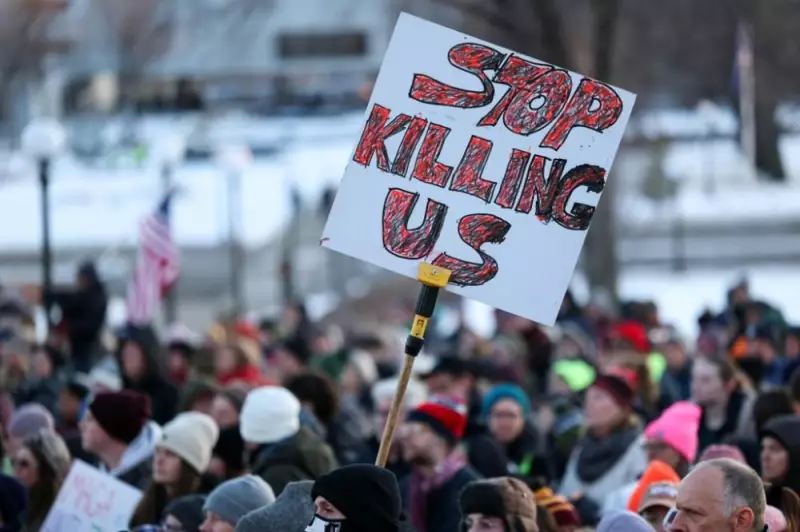
In the heart of Minneapolis, a powerful community response has emerged to counter the fear instilled by U.S. Immigration and Customs Enforcement (ICE) operations. What began as a single act of kindness has blossomed into a city-wide network of vigilance and mutual aid, with neighbors taking extraordinary steps to protect vulnerable immigrant families.
A Neighbour's Call to Action
The movement gained momentum after resident Jennifer Arnold learned a neighbour had been arrested by immigration authorities late last year. "She answered the phone sobbing because she had gone to a work site with her husband, and he had been pulled out of their car and picked up," Arnold recalled. Witnessing the terror that followed—families too afraid to leave their homes—she knew she had to act.
Her first concrete step addressed a critical need: getting children to school safely. Arnold noticed a nearby school bus stop, which typically served 20 children, had only 10. "Many of those families didn’t feel safe sending their kids because they had to walk a couple blocks to get to the stop," she explained. She began asking neighbours if they would send their children if someone could walk or drive them. The answer was a resounding yes.

Building a Network of Safety
What started in the second week of December with helping a dozen children quickly grew. "And then the next week, it was 18 kids. And now I have 30 on my list," Arnold stated. Parents, neighbours, and friends of friends signed up to form a volunteer transportation web, ensuring children could attend class without falling behind.
The community's efforts expanded beyond school runs. When Christmas arrived, Arnold organized a program where volunteers "adopted" families for the holiday, delivering bags of groceries. This initiative provided crucial support, with families reporting that without it, "my kids would have been hungry."
The situation took a deadly turn on Wednesday, January 6, 2026, when 37-year-old Renee Nicole Good was fatally shot by a masked ICE agent during an operation. This tragedy, however, did not deter the community; it inspired more volunteers to join the cause. "Since what happened on Wednesday, my list is growing," Arnold noted.
Institutional and Street-Level Responses
Recognizing the profound fear affecting students, the city of Minneapolis announced on Friday, January 8, 2026, that it was launching remote learning options through mid-February for families who need it.
On the streets, a simple but effective early-warning system has been adopted: whistles. Neighbors use them to alert each other to the presence of ICE agents in real-time. Education union leader Natasha Dockter wears her whistle "all the time now," stating she uses it "more often than I would like to." She keeps extra whistles in her pocket to distribute, turning the tool into both an alarm and a conversation starter about the ongoing crisis.
Yet, beneath this organized response lies deep trauma. Activist Becca Dryden, 36, highlighted the silent suffering, describing children who "have lost a family member, who are completely traumatized, who are terrified every day." She emphasized the heavy burden on parents, explaining, "Whether they are targeted themselves or watching their neighborhood and community be targeted, this is a trauma that’s happening to all of our children."
The story unfolding in Minneapolis is one of profound fear met with formidable solidarity. It showcases a community refusing to be paralyzed, instead choosing to build its own systems of protection, alert, and care in the face of a sweeping federal crackdown.






