

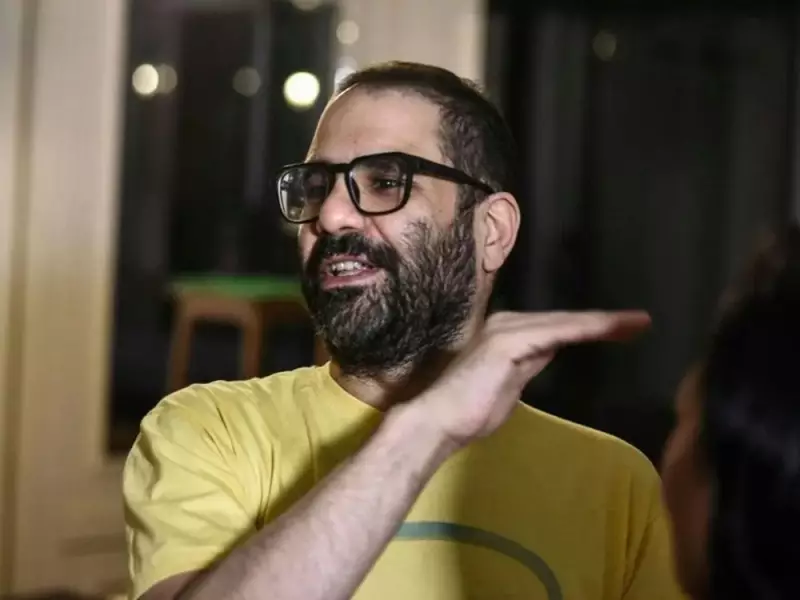
The return of a prominent British-Egyptian activist to the United Kingdom has ignited a political firestorm, with opposition parties demanding his deportation over resurfaced social media posts that called for violence.
Apology and Political Backlash
Alaa Abdel Fattah issued a public apology on Monday, December 29, 2025, for historical posts from 2010 in which he advocated for violence against Zionists and police. The posts surfaced just days after he arrived in Britain, following years of diplomatic efforts by London to secure his release from detention in Egypt.
"Looking at the tweets now — the ones that were not completely twisted out of their meaning — I do understand how shocking and hurtful they are, and for that I unequivocally apologize," Abdel Fattah stated. He added that some posts had been "completely misunderstood, seemingly in bad faith."

Despite his apology, the reaction from British political figures was swift. The U.K. Foreign Ministry condemned the old posts on Sunday, labeling them as "abhorrent." Prime Minister Keir Starmer, who had initially expressed delight at Abdel Fattah's reunion with family, now faces mounting pressure from opposition benches.
Calls for Citizenship Revocation and Deportation
The Conservative Party and Reform UK have led calls for the government to strip Abdel Fattah of his citizenship and deport him. Abdel Fattah was granted British citizenship in December 2021 under the previous Conservative government, through his British-born mother.
Robert Jenrick, the Conservative justice spokesman, urged Prime Minister Starmer to "begin proceedings to revoke his citizenship and deport him." In a post on X, Jenrick suggested Starmer retract his earlier supportive comments.
In a parallel move, Nigel Farage, leader of Reform UK, wrote to Interior Minister Shabana Mahmood, urging her to "order" Abdel Fattah's deportation. Farage argued that anyone holding "racist and anti-British views" should not be permitted in the country.
Background: From Arab Spring to Imprisonment
Alaa Abdel Fattah was a leading figure in Egypt's 2011 Arab Spring uprising. His recent ordeal began with his detention in Egypt in September 2019. In December 2021, he was sentenced to five years in prison on charges of spreading false news.
His case drew international attention when he began a hunger strike in March 2025 while incarcerated. He was later released after receiving a pardon from Egyptian President Abdel-Fattah el-Sisi. The U.K. government noted that securing his freedom had been "a long-standing priority under successive governments."
The controversy highlights the complex intersection of free speech, historical online activity, and immigration policy. It also tests the Starmer government's stance on individuals with contentious pasts who hold British citizenship. The coming days will determine whether the government pursues legal action to revoke Abdel Fattah's status or allows him to remain in the country following his apology.






