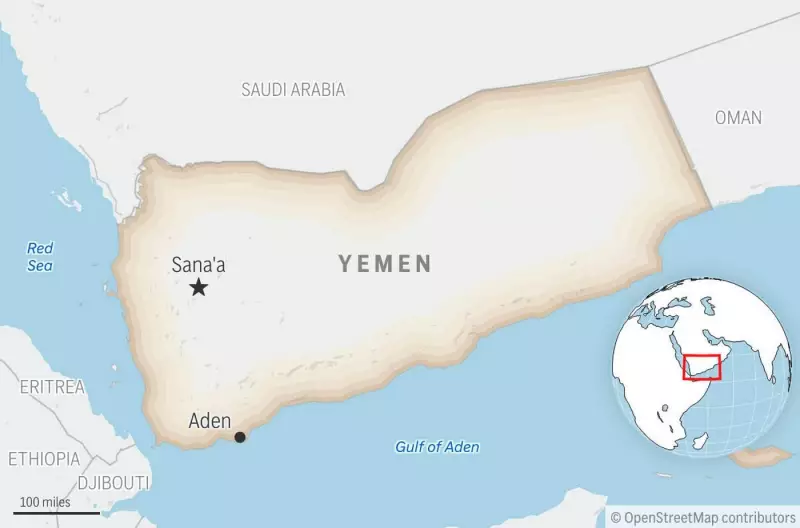
A senior Yemeni official aligned with the United Arab Emirates (UAE) has publicly declared that southern forces in Yemen will not unify under the command of the Saudi-led coalition. This statement, reported on January 11, 2026, underscores the persistent and complex fractures within the anti-Houthi alliance, complicating efforts to resolve the nation's long-running civil war.
A Defiant Stance from the South
The official's remarks represent a clear challenge to the authority of the Saudi-led coalition, which has been spearheading military operations against the Houthi movement since 2015. While both the UAE and Saudi Arabia are nominal partners in the coalition, they have often backed different local factions on the ground, leading to competing power centers.
This declaration signals that forces in southern Yemen, which have enjoyed substantial Emirati support, are asserting their autonomy. It reflects a strategic divergence between Abu Dhabi and Riyadh regarding the future political and military structure of Yemen, particularly in the south where secessionist sentiments run strong.

Implications for Yemen's Future and Regional Stability
The refusal to unite under a single coalition command has significant implications. It threatens to fragment the anti-Houthi front further, potentially weakening its overall effectiveness and providing the Houthis with strategic advantages. For Yemeni civilians, this political maneuvering between external powers prolongs a conflict that has created one of the world's worst humanitarian crises.
Internationally, this development poses a challenge for diplomatic efforts aimed at brokering a nationwide ceasefire and a sustainable political settlement. It highlights how regional rivalries between Gulf states are being played out on Yemeni soil, with local forces acting as proxies. The statement makes it clear that any future peace deal must address the ambitions and grievances of southern separatist groups, not just the conflict between the internationally recognized government and the Houthis.
A Conflict Defined by Fractures
This latest news is a stark reminder that the war in Yemen is not a simple binary struggle. It is a multi-layered conflict involving an array of local, regional, and international actors with often conflicting goals. The Saudi-led coalition, initially formed to restore the government of President Abd Rabbu Mansour Hadi, has struggled to maintain unity among its diverse partners.
The UAE's focus has frequently been on cultivating influence in southern Yemen and combating what it perceives as Islamist threats, a priority that does not always align with Saudi objectives. This fundamental strategic difference now appears to be reaching a new point of public contention, as articulated by the pro-UAE Yemeni official. The path to peace in Yemen remains fraught with obstacles, not least the competing visions of those ostensibly on the same side.