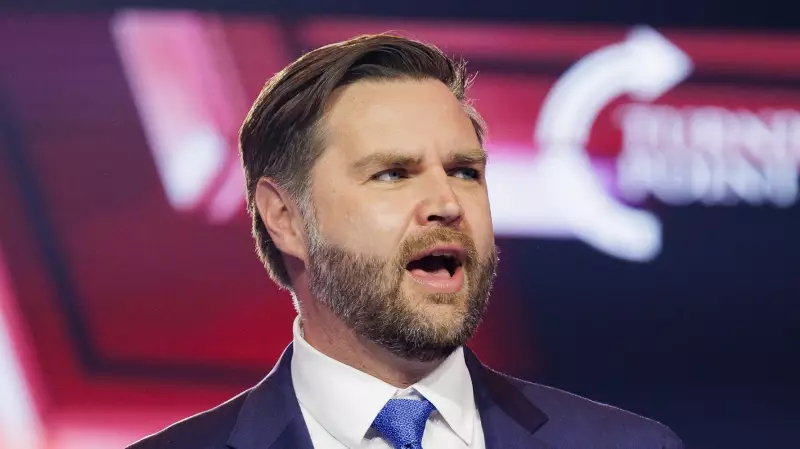
Vice President JD Vance mounted a spirited and at times combative defense of President Donald Trump's military actions against Venezuela in a series of posts on social media platform X on Sunday. The vice president argued the operations were aimed at combating "narcoterrorists," while also acknowledging the significant role of Venezuela's vast oil reserves in the conflict.
Defending the Drug War Rationale
Vance opened his argument by pushing back against critics who claim Venezuela has minimal involvement in the drug trade, a stance that challenges the Trump administration's original justification for strikes that began in September. At that time, the administration stated U.S. military actions against Venezuelan-manned boats in the Caribbean were intended to disrupt drug smuggling, specifically the flow of fentanyl.
"First off, fentanyl isn't the only drug in the world and there is still fentanyl coming from Venezuela (or at least there was)," Vance stated. He pivoted to identify cocaine as the "main drug" being trafficked through the South American nation. He labelled cocaine the primary profit driver for Latin American cartels, asserting that targeting it would substantially weaken their operations. "Also, cocaine is bad too!" he added pointedly.

The vice president conceded that the majority of fentanyl entering the United States comes via Mexico, a trafficking route he said remains a policy focus. He linked this directly to border security, stating it was the "reason why President Trump shut the border on day one." Official data supports this flow; according to BBC-cited Customs and Border Patrol figures, 96% of U.S.-bound fentanyl seized by authorities is intercepted at the southern border with Mexico.
The Central Role of Oil Reserves
Vance then addressed the other, more contentious motivator: Venezuela's oil wealth. This followed President Trump's own comments on Saturday, where he openly discussed the "tremendous amount of wealth" America intends to secure through Venezuela's oil reserves following the capture of President Nicolás Maduro.
In his post, Vance framed the issue as a matter of reclaimed property, alleging "Venezuela expropriated American oil property" about two decades ago. He claimed the country subsequently used "that stolen property to get rich and fund their narcoterrorist activities." This is a reference to the nationalization of Venezuela's oil industry under former socialist president Hugo Chávez in the 2000s, a move that redirected profits from foreign firms to social programs.
A Justification of Force and Power
Concluding his argument, Vance directly tackled concerns about the use of military force. "Are we just supposed to allow a communist to steal our stuff in our hemisphere and do nothing?" he asked rhetorically. His answer framed the actions as those of a resurgent global power. "Great powers don't act like that," Vance wrote. "The United States, thanks to President Trump's leadership, is a great power again. Everyone should take note."
The vice president's detailed public defense highlights the dual-pillared justification—narco-terrorism and economic restitution—that the administration is advancing for its deepening involvement in Venezuela. The comments solidify the connection between the military action, the war on drugs, and the strategic goal of controlling vital energy resources, setting a firm precedent for U.S. policy in the region.