U.S. Secretary of State Marco Rubio has declared that the United States will utilize its control over Venezuela's crucial oil sector to compel further political transformation in the South American nation. This follows the dramatic U.S. operation that removed President Nicolás Maduro from power in Caracas over the weekend.
Rubio Emerges as Key Voice on Venezuela Strategy
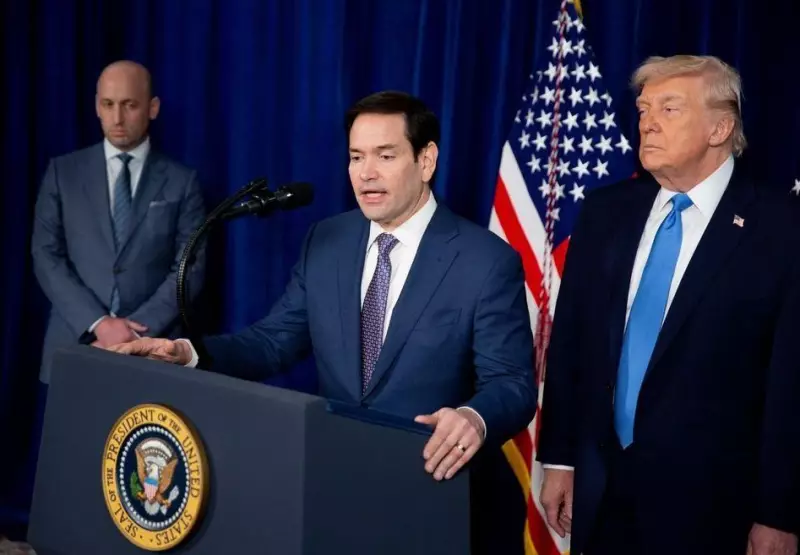
On Sunday, January 4, 2026, Marco Rubio positioned himself as the Trump administration's chief public voice on the unfolding situation in Venezuela. The 54-year-old former senator from Florida outlined a strategy centered on economic pressure, specifically targeting the country's lifeblood: its oil industry.
"There's a quarantine right now in which sanctioned oil shipments — there's a boat, and that boat is under U.S. sanctions, we go get a court order — we will seize it," Rubio stated during an interview on CBS's Face the Nation. He emphasized that this provides "a tremendous amount of leverage" for Washington to press for specific changes from Venezuela's new leadership.

Demands for Venezuela's Post-Maduro Leadership
With questions swirling about the U.S. approach to the transitional government led by acting President Delcy Rodríguez, Rubio laid out clear demands. He insisted that Venezuelan authorities must:
- Sever all ties with U.S. adversaries Iran, Hezbollah, and Cuba.
- Completely halt drug trafficking activities.
- Ensure the nation's oil industry does not financially benefit American foes.
Rubio's hardline stance reflects his long-held skepticism about negotiating with Maduro, whom the U.S. considered an illegitimate leader and has accused of "narco-terrorism." His perspective appears to have won out within the administration, culminating in Saturday's raid.
A Personal and Strategic Focus on Latin America
For Rubio, this moment represents the culmination of a lifelong focus on Latin American politics, rooted in his upbringing in Miami's Cuban exile community. His 2012 autobiography, An American Son, details how he role-played overthrowing Cuba's communist rulers with his grandfather.
He directly connected the current situation to Cuba, which has long relied on cheap Venezuelan oil. "Maduro's internal security apparatus is entirely controlled by Cubans," Rubio asserted on NBC's Meet the Press. While declining to specify if Cuba is the administration's next target, he called its government "a huge problem" and suggested, "If I lived in Havana and I was in the government, I'd be concerned."
Defining "Running" Venezuela from Afar
President Trump sparked questions after stating the U.S. would now "run" Venezuela, a comment made while flanked by Rubio, Defense Secretary Pete Hegseth, and General Dan Caine. Rubio clarified that this involves directing policy and applying sustained pressure, not a physical military occupation.
"It's running policy," Rubio explained. "We want Venezuela to move in a certain direction because not only do we think it's good for the people of Venezuela, it's in our national interest." He dismissed comparisons to U.S. involvement in Libya or Iraq, arguing Venezuela's context is fundamentally different.
President Trump issued a stark warning to acting President Delcy Rodríguez, who had called for Maduro's release. In an interview with The Atlantic on Sunday, Trump stated, "If she doesn't do what's right, she is going to pay a very big price, probably bigger than Maduro."
A U.S. official confirmed that Rubio will take the leading administration role in shaping policy toward Venezuela, a country he has criticized throughout his career, targeting both Maduro and his predecessor, Hugo Chávez.