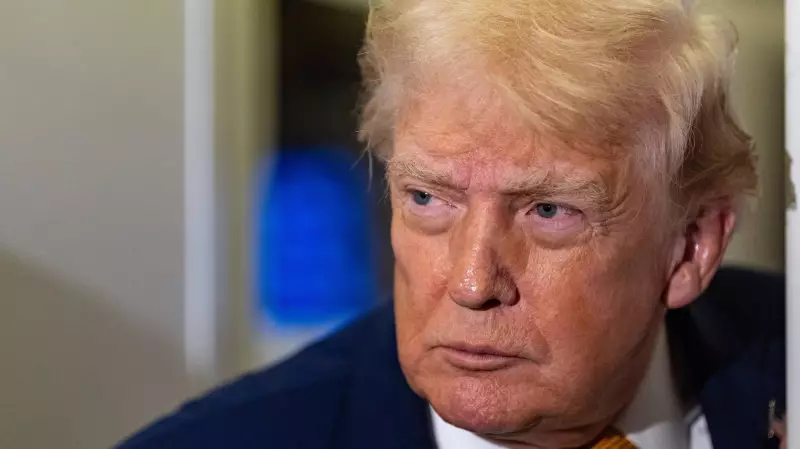
President Donald Trump's repeated statements that the United States will "run" Venezuela following the military capture of that country's president, Nicolás Maduro, and his wife, Cilia Flores, has triggered bipartisan unease among U.S. lawmakers. The operation, which occurred over the weekend, has left even senior Republicans seeking clarification on the administration's intentions and the legal basis for its actions.
Republican Senators Seek Clarification on 'Run' Remark
On Monday, key Republican figures expressed confusion and concern over President Trump's terminology. Senator Shelley Moore Capito of West Virginia, a member of the Senate GOP leadership, told reporters that the interpretation of "run" has been broad and that the administration appeared to be trying to narrow it down. "I think it needs more clarification," she stated.
The sentiment was echoed by others. Senator Ron Johnson of Wisconsin simply said, "It's all unknowable. I have no idea." Senator Thom Tillis of North Carolina offered a stark assessment, suggesting that properly administering Venezuela could require 100,000 U.S. troops on the ground—a policy he does not support. He added that the details remain "very vague."

Perhaps the most pointed criticism came from Senator Rand Paul of Kentucky, a long-time critic of the military campaign against Venezuela. He warned that Trump's rhetoric, regardless of its intended meaning, would backfire. "It sounds like the 19th century," Paul said, referencing a history of American imperialism. "It will push our friends away...It will drive a wedge between us and potential future leaders of Venezuela."
Legal Authority and Congressional Notification Debated
The Trump administration did not notify Congress in advance of the military bombardment of Caracas or the mission to capture Maduro. Secretary of State Marco Rubio informed select members only after the operation was completed. This decision drew sharp criticism from Democrats, who argue the President must seek approval for the use of force from Congress as mandated by the Constitution.
However, top Republicans defended the administration's approach. Senate Majority Leader John Thune argued that prior notification for such "hypersensitive missions" was "ill-advised" and expressed satisfaction with the post-operation briefing. Republicans have described the bombardment, which killed dozens, as a law enforcement action aimed at bringing Maduro to the U.S. to face "narco-terrorism" charges.
Despite Trump's claims, the Venezuelan government continues to function. On Monday, Vice President and Oil Minister Delcy Rodriguez was formally sworn in as the country's interim president.
Broader Concerns Over Intervention and Nation-Building
In the wake of Maduro's capture, President Trump has made threatening remarks toward other nations, including Cuba, Colombia, Mexico, Iran, and Greenland. In an interview with NBC News, he suggested the U.S. oil industry, with government financial support, would take over Venezuela's oil production.
Democrats warn the administration is repeating the mistakes of past failed interventions. After a congressional briefing for intelligence committee members, Senate Minority Leader Chuck Schumer said the administration's plan was "vague, based on wishful thinking, and unsatisfying." He expressed concern that the U.S. might attempt similar actions in other countries and concluded that such regime change efforts "always end up hurting the United States."
The unfolding situation highlights deep divisions and uncertainties in Washington regarding the scope, legality, and long-term strategy of U.S. involvement in Venezuela following the dramatic capture of its leader.