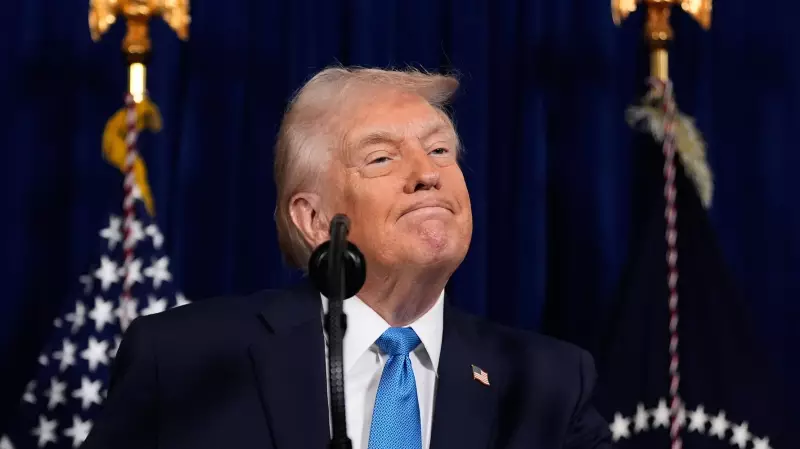
The political landscape of Venezuela and U.S. foreign policy have been thrown into turmoil following a dramatic military operation ordered by President Donald Trump. On Saturday, U.S. forces launched an attack aimed at capturing Venezuelan President Nicolás Maduro, an operation that resulted in the deaths of approximately 80 soldiers and civilians.
A Shocking Declaration and a Power Vacuum
In a subsequent press conference, President Trump declared that the United States would now "run" Venezuela, a statement that sent shockwaves through diplomatic circles. The administration's stated goal is to prosecute Maduro in New York on drug trafficking charges. However, Washington has provided scant detail on its plans for governing the nation of 28 million people, which is already reeling from political repression, corruption, and a catastrophic economic collapse exacerbated by years of American sanctions.
Secretary of State Marco Rubio appeared to temper expectations on Sunday, suggesting U.S. involvement might be more limited. He proposed using a naval blockade to halt Venezuela's crucial oil exports, thereby pressuring the new government in Caracas—now led by Vice President Delcy Rodriguez—to change its policies. Despite this, the administration's apparent ambitions are vast, including rebuilding the Venezuelan oil industry with American companies, overhauling society, and forcing the country to sever ties with allies like Cuba and China.

Expert Analysis: A 'Personalist' Policy with No Guardrails
Columbia University professor Elizabeth Saunders, an expert on foreign policy, expressed profound alarm in an interview with HuffPost. She described being "even more shocked" 24 hours after Trump's pronouncement and questioned whether officials like Rubio and National Security Adviser Pete Hegseth were equally stunned. Saunders highlighted the absence of a coherent plan, noting, "I don't think we have any idea what it means for the Trump administration to 'run' Venezuela."
She pointed to a crippling lack of process and expertise within the administration, contrasting it with past interventions. "This is incompetent, inexperienced people," Saunders stated, emphasizing that the usual internal "guardrails" that constrain presidential power in most administrations are utterly absent. The fate of millions of Venezuelans, she warned, now hangs in the balance due to this chaos.
Legal Quandaries and Shifting Objectives
The operation has ignited fierce debate over its legality. The administration has labeled it a "law enforcement effort" to avoid consulting Congress under war powers statutes—a justification Saunders dismisses. The raid to capture Maduro has been widely criticized as illegal, and there are deep concerns that military personnel are being ordered to carry out potentially unlawful missions.
Further complicating matters is the confusion over U.S. objectives. Reports suggest the effort was driven by a mix of motives: a long-standing project of Marco Rubio, Stephen Miller's desire to leverage a war declaration for domestic deportation agendas, strategic moves to counter China and Russia, and Trump's own focus on Venezuela's vast oil reserves. Saunders compares this to the Iraq War, where a "logroll" of different interest groups supported the invasion for disparate reasons, leading to a disastrously incoherent aftermath.
"If the goal is fuzzy from the beginning then no, you can't have a coherent policy," Saunders explained. She sees little chance of a successful occupation, citing historical studies that show such foreign-imposed regime changes almost always fail without a unifying external threat to justify the presence, as existed in post-war Germany and Japan.
What Comes Next for Venezuela and U.S. Power?
The range of possible outcomes is now enormous, from a full-scale occupation to a shaky accommodation with acting leader Delcy Rodriguez. Saunders notes that Trump, who prefers to "declare victory and go home," might seek a deal, but Rodriguez has so far resisted. The professor is deeply pessimistic about Congress's ability to rein in what she calls Trump's "personalist" foreign policy, especially with Democrats not in control of either chamber.

The ultimate cost, she stresses, will be borne by the Venezuelan people. "They will suffer for these events," Saunders said, highlighting the human toll of an operation launched without a plan for the "day after." The incident stands as a stark example of a presidency unmoored from traditional processes, with global consequences stemming from unilateral whims.