The ambitious plan by former U.S. President Donald Trump to seize control of Venezuela's vast oil reserves and revitalize its crippled industry is confronting a series of formidable legal, logistical, and political challenges. This bold geopolitical maneuver follows the stunning capture and extradition of Venezuelan President Nicolás Maduro to the United States, an operation Trump has claimed will allow the U.S. to 'run' the South American nation.
Operation and Immediate Fallout
The operation that led to Maduro's arrival in U.S. custody has sent shockwaves through international relations and disrupted daily life. Notably, it caused significant holiday travel chaos across the Caribbean, leading to the cancellation of hundreds of flights. The stated goal, beyond the legal proceedings against Maduro, is for the United States to take direct control of Venezuela's oil industry, which holds the world's largest proven reserves but has suffered from years of mismanagement, corruption, and underinvestment under Maduro's regime.
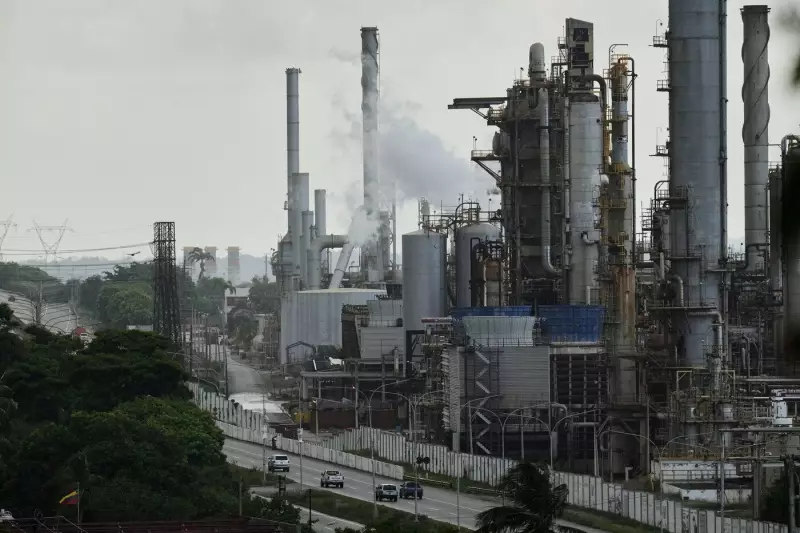
Trump's vision involves American companies and expertise moving in to overhaul infrastructure, such as the El Palito refinery in Puerto Cabello, and dramatically increase production. However, experts point out that the plan faces immediate hurdles, including the need for a massive injection of capital, the daunting task of repairing dilapidated facilities, and the complex web of international sanctions that would need to be navigated or dismantled.

International Reaction and Canadian Response
The move has not gone unnoticed or unchallenged on the global stage. In Canada, the foreign minister issued a formal response to the U.S. capture of Maduro, reflecting the delicate diplomatic position Ottawa must maintain. More visibly, the action has galvanized segments of the Canadian public.
In Toronto, demonstrators rallied under the banner 'Hands off Venezuela' to protest what they view as a brazen act of U.S. interventionism and a violation of Venezuelan sovereignty. The protest highlights the deep divisions and strong opinions within Canada regarding foreign policy and the appropriate use of American power. This domestic reaction adds a layer of complexity to the bilateral relationship between Canada and the U.S. regarding the Venezuela issue.
Legal and Practical Roadblocks Ahead
Beyond the street protests, the plan's path is riddled with obstacles. Legally, any attempt by a U.S. administration to directly control another nation's sovereign assets would face intense scrutiny and almost certain challenges in international courts. It would set a controversial precedent with far-reaching implications for global norms.
Practically, the Venezuelan oil industry is in a state of severe disrepair. Years of brain drain, lack of maintenance, and U.S. sanctions have left it operating at a fraction of its capacity. Revitalizing it would require tens of billions of dollars and many years, even under ideal conditions. Furthermore, the political instability within Venezuela and the lack of a recognized, stable government to partner with creates a vacuum that complicates any large-scale economic project.
The situation remains fluid and highly contentious. While the Trump administration frames the move as a step toward stability and energy security, critics denounce it as a modern-day resource grab. The coming months will test the feasibility of seizing and revitalizing Venezuela's oil crown jewels, a task that appears as politically charged as it is technically daunting.