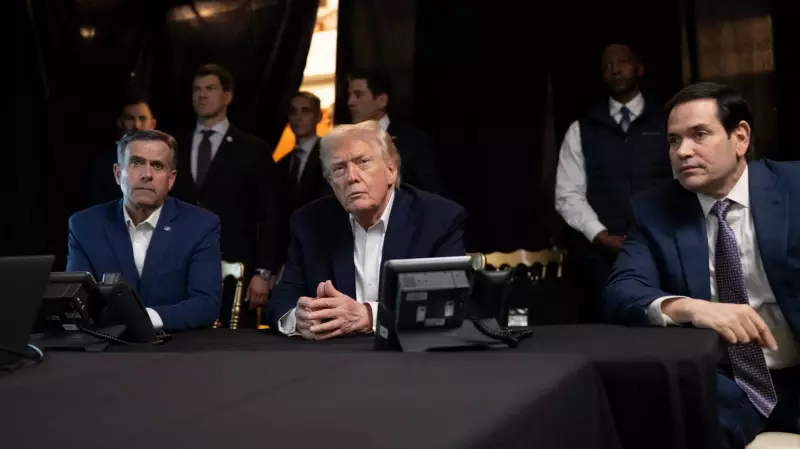
In a move that starkly contradicts his long-standing non-interventionist rhetoric, President Donald Trump has launched a military operation against Venezuela, resulting in the capture of President Nicolas Maduro and a declaration of temporary U.S. administration over the South American nation.
A Striking Departure from Campaign Promises
The operation, which included strikes on the capital Caracas and other areas over the weekend of January 3, 2026, led to the arrest of Maduro and his wife. They face drug-trafficking charges in New York. This aggressive action marks President Trump's most significant foreign military engagement to date.
This intervention stands in direct contrast to the "America First" philosophy that Trump championed throughout his political career. During his second inauguration just a year prior, in January 2025, he told supporters, "We will measure our success not only by the battles we win, but also by the wars that we end, and perhaps most importantly, by the wars we never get into."

Since that speech, however, the Trump administration has conducted military actions in Syria, Iraq, Iran, Nigeria, Yemen, and Somalia. The Venezuela operation, involving "boots on the ground" and plans to "run the country" during a transition, signifies a new level of commitment.
Domestic Political Fallout and Republican Divisions
The move has ignited immediate debate within the United States, particularly among Republicans. Some party members had hoped the president would focus more intently on domestic issues like affordability, health care, and the economy ahead of the crucial November 2026 midterm elections.
Prominent figures have voiced dissent. U.S. Representative Marjorie Taylor Greene, a Georgia Republican, announced her resignation from Congress, citing Trump's departure from non-interventionist principles. "This is what many in MAGA thought they voted to end. Boy were we wrong," she posted on social media.
Senate Minority Leader Chuck Schumer, a Democrat, criticized the action as reckless, undertaken without congressional authorization or a clear plan for Venezuela's future. Within Republican ranks, officials like Senator Mike Lee and Representative Thomas Massie questioned the constitutional basis of the operation, though Lee later expressed tentative support after discussions with Secretary of State Marco Rubio.
Historical Parallels and the Risk of a Quagmire
Trump's policy now bears striking similarities to Republican predecessors he once criticized. The invasions of Grenada in 1983 under Ronald Reagan and Panama in 1989 under George H.W. Bush serve as historical parallels, both involving the ousting of leaders deemed illegitimate by Washington.
Foreign policy experts warn of significant risks. Polls before the attack showed limited public support for military action in Venezuela, with only about 20% of Americans in favour according to a November Reuters/Ipsos survey. The ongoing commitment risks drawing the U.S. into a complex and lengthy nation-building process.
"I don't see any short version of this story," said Brett Bruen, a former Obama administration adviser. "The U.S. will get tangled up in Venezuela but will also have new problems to contend with related to its neighbors."
While some, like former Trump envoy Elliott Abrams, support Maduro's removal, they caution that the true test will be supporting a genuine democratic transition. As the Trump administration assumes temporary control of a country with the world's largest oil reserves, the long-term political and strategic consequences, both abroad and at home, remain profoundly uncertain.