In the wake of the dramatic capture of Venezuelan leader Nicolas Maduro, an emboldened U.S. President Donald Trump has signaled that his administration's focus may shift to other nations, raising urgent questions about the future of American interventionism.
Trump's Expanding List of Targets
During a revealing half-hour exchange with reporters aboard Air Force One on Sunday, President Trump named several potential targets. He took direct aim at Colombia, Cuba, Greenland, Mexico, and Iran, showcasing a broad and assertive foreign policy vision. This marks a stark shift for a president who once scorned interventionism but now asserts Washington's right to act decisively in what he considers its backyard.
The operation against Maduro, which occurred on January 3, 2026, and resulted in the deaths of 32 Cuban bodyguards according to Havana, appears to have been a catalyst. Trump, who openly campaigned for the Nobel Peace Prize last year, now frames such actions as enforcing national security and regional hegemony.

Greenland: A Strategic Ambition
In the days following the Venezuela operation, Trump has aggressively renewed his interest in annexing Greenland from Denmark. He argues that the mineral-rich, semi-autonomous territory is crucial for U.S. national security, claiming Denmark cannot protect it from rivals like Russia and China.
Analyst Asli Aydintasbas, a fellow at the Brookings Institution's Center on the United States and Europe, told AFP that Greenland is the most likely next target. However, Danish Prime Minister Mette Frederiksen has issued a stark warning, suggesting that any forced takeover could spell the end of the NATO alliance. Instead of military force, Washington may opt to increase diplomatic pressure, potentially demanding a referendum in Greenland.
Colombia and Cuba: Hemispheric Pressure
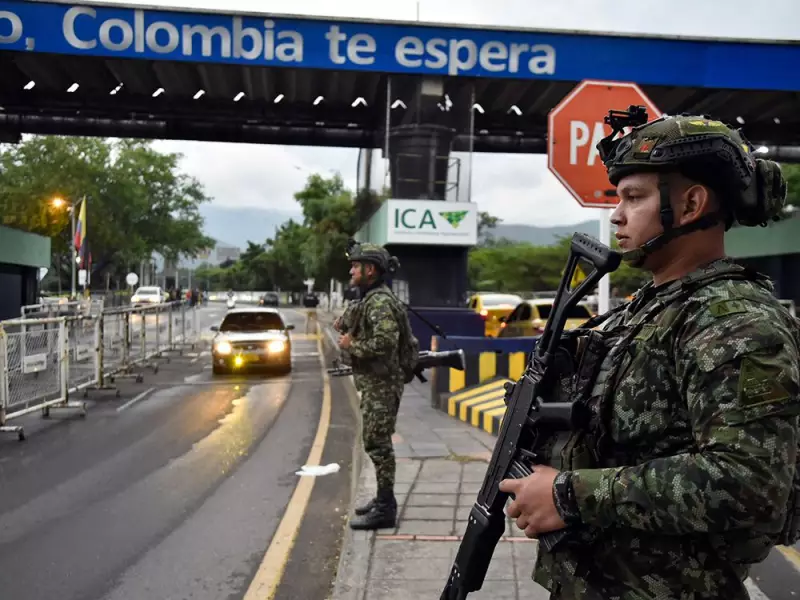
Colombia has faced some of Trump's most severe threats. The U.S. president warned leftist Colombian President Gustavo Petro to "watch his ass" and expressed openness to military action, accusing Petro of collusion with drug traffickers—a tactic similar to the rhetoric used against Maduro. Petro, who has long traded barbs with Trump over Venezuela, responded on Monday by stating he was prepared to "take up arms" against any aggression.
However, Colombia's complex landscape, with numerous armed groups from its civil war, presents a significant challenge. The Trump administration may instead use the Venezuela precedent to compel other Latin American leaders to acquiesce to U.S. demands. "Basically he is saying 'I can bully the country into submission,'" Aydintasbas noted.
Regarding Cuba, Trump claimed the communist nation was "ready to fall." The island, a long-standing U.S. adversary and key Venezuelan ally, has been a priority for U.S. Secretary of State Marco Rubio. Despite the lethal incident involving Cuban personnel in Venezuela, Trump suggested military action might not be necessary, predicting Cuba's economy would collapse without subsidized Venezuelan oil.
Geopolitical Repercussions and the Road Ahead
The aftermath of the Venezuela operation and Trump's subsequent comments have sent shockwaves through international diplomacy. The explicit threats toward allied and adversarial nations alike suggest a new era of unilateral U.S. action under the banner of regional security. The world is now closely watching to see which of these hinted-at targets, if any, will face the next application of this assertive doctrine.
The coming weeks will test alliances, particularly with European partners over Greenland and with neighbors in Latin America, as the Trump administration continues to redefine the limits of American power and intervention in the 2020s.