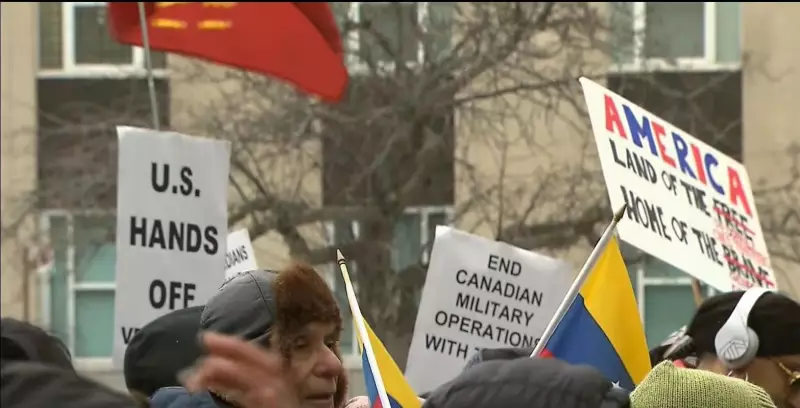
A Toronto mother and her daughter are experiencing a profound sense of relief and justice following the political ouster of Venezuelan leader Nicolas Maduro, a regime that once specifically targeted them. Their personal story emerges amid a complex international landscape that is also reshaping Canada's domestic energy policy discussions.
A Personal Victory Amid Global Upheaval
Heather Wright reported on January 06, 2026, that the Toronto family, whose identities were previously threatened by the Maduro government, is now celebrating its downfall. While the specific reasons for the regime's targeting remain part of their private ordeal, the emotional weight of seeing Maduro removed from power is a significant personal milestone. This development coincides with major geopolitical shifts, including a U.S. military strike on Venezuela that Cuba reported resulted in the deaths of 32 officers, an action the U.S. has defended.
Canada's Energy Policy Debate Intensifies
The turmoil in Venezuela has directly fueled a critical debate within Canada about its own energy future. British Columbia Premier David Eby has seized on the incident to argue that Canada should focus on building refineries rather than pipelines. Eby contends that this approach would enhance national energy security and economic resilience in an unstable world. This viewpoint is gaining traction as global oil markets react to the Venezuelan crisis, with stock markets in Canada and the U.S. reaching new highs amid the continued focus.

Former Bank of Canada governor Mark Carney has weighed in, suggesting that Canadian oil will remain competitive in the wake of Maduro's ouster. Meanwhile, the Alberta government is proactively exploring new opportunities, having launched an official website to gauge interest and plan for a potential new West Coast oil pipeline, indicating that the national conversation on energy infrastructure is far from settled.
A Broader Context of Security and Justice
The story of the Toronto family is a stark reminder of how international authoritarianism can reach into the lives of Canadian citizens. It unfolds as Canada continues to assert its role on the global stage. The federal government, under Prime Minister Justin Trudeau, has co-signed a pact aimed at helping secure Ukraine from Russian attacks following a peace deal, highlighting an ongoing commitment to global stability.
Domestically, the pursuit of justice continues in other spheres. A sentencing hearing is underway for the former CEO of the IWK Health Centre who was convicted of fraud, and a New Brunswick trial is hearing details of an 'armed intruder' who murdered a Dieppe couple while allegedly looking for their son. These parallel narratives of accountability—personal, corporate, and criminal—paint a picture of a society grappling with complex forms of justice.
The ouster of Maduro represents more than a geopolitical event for the Toronto mother and daughter; it is a deeply personal closure. Their experience underscores the tangible, human consequences of foreign dictatorships and the ripple effects that such international crises have on policy debates thousands of miles away in Canada.