Russia and Ukraine Envoys Engage in U.S.-Brokered Talks in Abu Dhabi
In a significant diplomatic development, representatives from Russia and Ukraine have met in Abu Dhabi for talks facilitated by the United States. This meeting, held on February 4, 2026, marks a continued effort to address the ongoing conflict that has persisted for years, with recent military actions underscoring the urgency of these discussions.
Context of the Negotiations
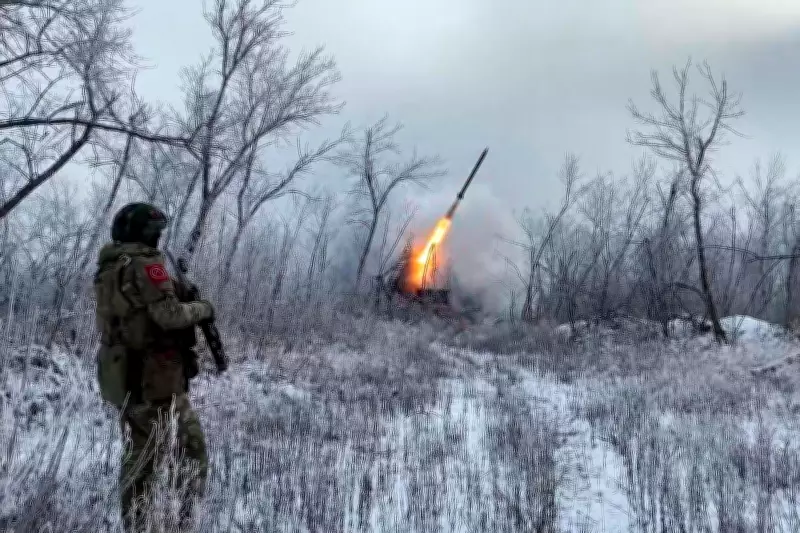
The talks come at a critical juncture, as evidenced by recent footage released by the Russian Defense Ministry. The video, dated February 4, 2026, shows a Russian TOS-1A multiple rocket launcher firing towards Ukrainian positions at an undisclosed location in Ukraine. This visual reminder highlights the active hostilities that form the backdrop to these diplomatic efforts.
Abu Dhabi, the capital of the United Arab Emirates, serves as a neutral venue for these negotiations, reflecting its role in international diplomacy. The U.S. involvement in brokering the talks underscores the global implications of the conflict, with many nations, including Canada, monitoring the situation closely due to its impact on international security and economic stability.

Global and Regional Implications
The Russia-Ukraine war has far-reaching consequences, influencing everything from energy markets to defense policies worldwide. For Canada, as a member of NATO and a proponent of international law, the outcome of these talks could affect its foreign policy and trade relations. The conflict has already contributed to global uncertainty, as noted in recent economic discussions, such as warnings about tough budgets in provinces like Alberta amid such instability.
Moreover, the timing of these talks coincides with other international events, such as the upcoming Olympic Games, but the focus remains on achieving a peaceful resolution. The involvement of the U.S. as a mediator suggests a concerted effort to leverage diplomatic channels to de-escalate tensions and explore potential pathways to peace.
Challenges and Prospects for Peace
Despite the diplomatic engagement, challenges remain substantial. The conflict has deep historical and political roots, with both sides holding firm positions. The recent military actions, as depicted in the released video, indicate that hostilities have not ceased, making these talks all the more crucial. Analysts suggest that while a breakthrough may not be immediate, sustained dialogue is essential for building trust and addressing core issues.
In the broader context, this meeting aligns with global calls for conflict resolution, as seen in other regions facing similar challenges. For instance, discussions on critical minerals and international collaboration, as highlighted by Canada's Defense Minister Anita Anand attending a U.S. meeting, reflect how geopolitical tensions can spur cooperative efforts.
As the world watches, the Abu Dhabi talks represent a glimmer of hope in a protracted conflict. The outcome could shape not only the future of Russia and Ukraine but also the international order, emphasizing the importance of diplomacy in an era of complex global crises.