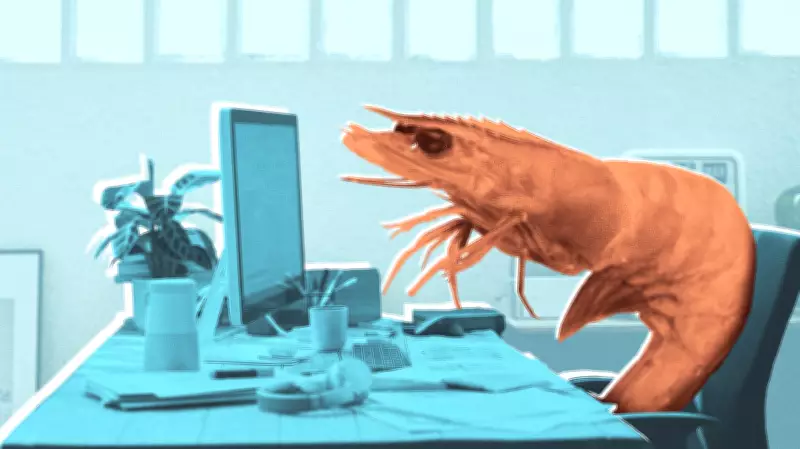
The 'Desk Shrimp' Phenomenon: More Than Just a Meme
When typing on a laptop, many people transform from an upright human into a curled-up shrimp. As the workday progresses, the forward hunch over the keyboard becomes more pronounced, a familiar sight under deadline pressure. The concept of a "desk shrimp" has gained traction as a popular internet meme, but it's far from a laughing matter. Continuously hunching over phones and computer screens poses genuine risks to both physical and mental well-being.
The Physical Toll of Hunching Forward
"If you hunch forward over something, you're doing yourself a disservice," stated Alan Hedge, an ergonomics expert and professor emeritus in the human-centered design department at Cornell University. "You are creating a lot of muscle tension in the back as your body leans forward. You're actually reducing air capacity to the lungs. You're restricting blood flow as you lean forward."
The more individuals "shrimp" forward during work, the greater the bodily consequences. "Over time, things will get worse and worse for you, and you will end up with an injury," Hedge explained regarding common ailments linked to "desk shrimping," such as carpal tunnel syndrome. "It will either be a neck, back, hip injury or a hand, wrist, arm, elbow injury."

Early Warning Signs and Long-Term Damage
The initial indicator that "desk shrimping" is harming the body often manifests as stiffness or a minor twinge. "You'll be rubbing your wrists, or something's not comfortable. Don't ignore that," Hedge cautioned. "Discomfort is the first stage of the path to injury."
This hunched posture accumulates pain over extended periods. "Slouching can lead to severe neck, back and shoulder issues, which can not only cause pain but upper back weakness, joint stiffness and even disc degeneration," said Karen Loesing, owner of The Ergonomic Expert, a firm that assesses ergonomics for businesses. "Unnatural positions can even cause numbness, tingling and pain due to nerve compression."
Digestive and Mental Health Impacts
For those experiencing indigestion, "desk shrimping" might be a contributing factor. This posture compresses the abdomen and limits space for digestion, slowing metabolism and increasing abdominal pressure, according to Loesing. "Compression forces stomach acid upwards," she noted. "This can lead to acid reflux, constipation and bloating. Any abdominal pressure makes it harder for the body to process food effectively."
Beyond physical discomfort, there is a significant mental toll. Minor headaches, wrist twinges, and neck aches become major distractions. "It becomes much more difficult for you to think clearly about things," Hedge warned. "If your back starts twinging, that distracts you." This distraction leads to fatigue, which in turn increases workplace errors. "When you get tired, your error rate goes up, your decision-making abilities go down," Hedge added.
Practical Solutions to Avoid Becoming a 'Desk Shrimp'
Are you a "desk shrimp"? This habit carries long-term health risks that require attention. To prevent shrimping, it's essential to relax bodily tension; greater relaxation naturally encourages leaning back. "As you sit back, your back comes into contact with a chair back, and that takes some of the body weight, so you get less weight going through to the hips. Your ability to breathe improves," Hedge elaborated.
Therefore, using an office chair with proper back support and adjusting it to fit your height is critical. For laptop users, Hedge recommended employing a laptop riser and a Bluetooth-connected keyboard. This setup allows for screen height adjustment, mitigating "desk shrimp" behavior. Loesing emphasized that "the most important rule is to know that [computer] monitor height dictates your posture."
"If your monitor is too low, you will likely be flexing downward. If your monitor is too high, you will crank your neck into extension," she said. "Keep your eyes aligned with your shoulders. Rolling shoulders back and down can help."

For phone users who tend to shrimp, Loesing suggested lifting the phone to eye level or resting elbows on a surface or the body for support. While these adjustments require practice, they are preferable to enduring lifelong aches and debilitating pains as a desk shrimp. Your body will express gratitude for these ergonomic improvements.