Russia Welcomes Cuban Diplomat, Calls for End to U.S. Embargo
In a significant diplomatic meeting, Russian officials hosted Cuban Foreign Minister Bruno Rodriguez in Moscow on Wednesday, February 18, 2026. The talks focused on strengthening bilateral relations and addressing international pressures facing Cuba.
High-Level Discussions in Moscow
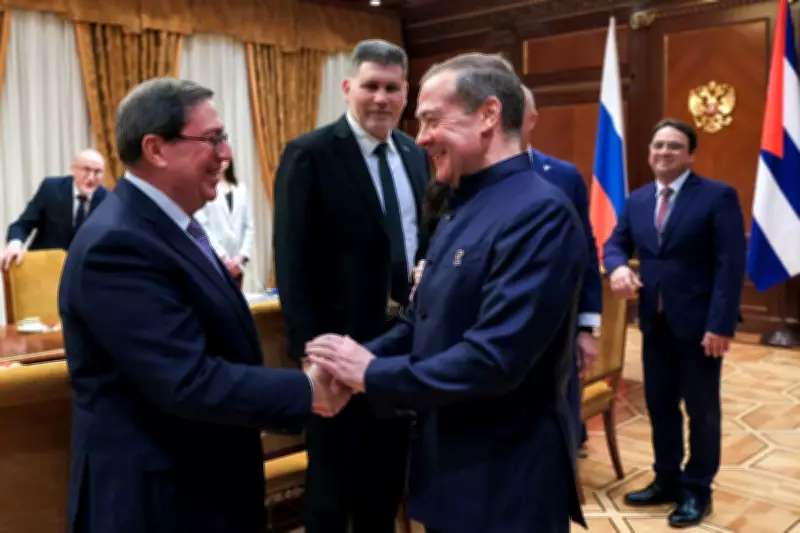
Rodriguez met with Dmitry Medvedev, Deputy Chairman of Russia's Security Council and head of the United Russia party, at the Kremlin. Photographs from the event show the two diplomats exchanging formal greetings prior to their closed-door negotiations. The meeting represents continued cooperation between Moscow and Havana amid ongoing geopolitical tensions.
Russia's Stance on U.S. Cuba Policy
During the discussions, Russian representatives explicitly urged the United States to abandon its economic blockade against Cuba. "We call on our American counterparts to reconsider their position regarding Cuba," stated a Russian diplomatic source familiar with the talks. "The continued sanctions represent an outdated approach to international relations that harms ordinary Cuban citizens."

The U.S. embargo against Cuba, first imposed in 1960 and strengthened over subsequent decades, restricts most trade and financial transactions between the two nations. Russia has consistently opposed these measures, viewing them as unilateral coercion in violation of international norms.
Strengthening Russia-Cuba Ties
The Moscow meeting served to reinforce the strategic partnership between Russia and Cuba, which has deepened in recent years through economic agreements and diplomatic coordination. Both nations have found common ground in their opposition to what they characterize as Western hegemony in global affairs.
"Our cooperation with Cuba extends across multiple sectors including energy, healthcare, and education," noted a Russian foreign ministry statement released after the talks. "We are committed to supporting Cuba's sovereignty and right to determine its own development path without external interference."
International Context and Implications
The timing of the meeting coincides with broader geopolitical realignments, as both Russia and Cuba face increasing pressure from Western nations. For Cuba, the U.S. embargo has created significant economic challenges, while Russia contends with its own sanctions following its military actions in Ukraine.
Analysts suggest the Moscow talks represent more than symbolic diplomacy. "This meeting signals Russia's intention to maintain and expand its influence in the Western Hemisphere," explained Dr. Elena Petrova, a professor of international relations at Moscow State University. "By positioning itself as Cuba's defender against American pressure, Russia gains both geopolitical leverage and a valuable ally in a region traditionally dominated by U.S. interests."
The discussions concluded without specific announcements of new agreements, but both sides emphasized their commitment to continued dialogue and cooperation. The Cuban delegation is expected to remain in Russia for additional meetings with economic and cultural officials before returning to Havana.