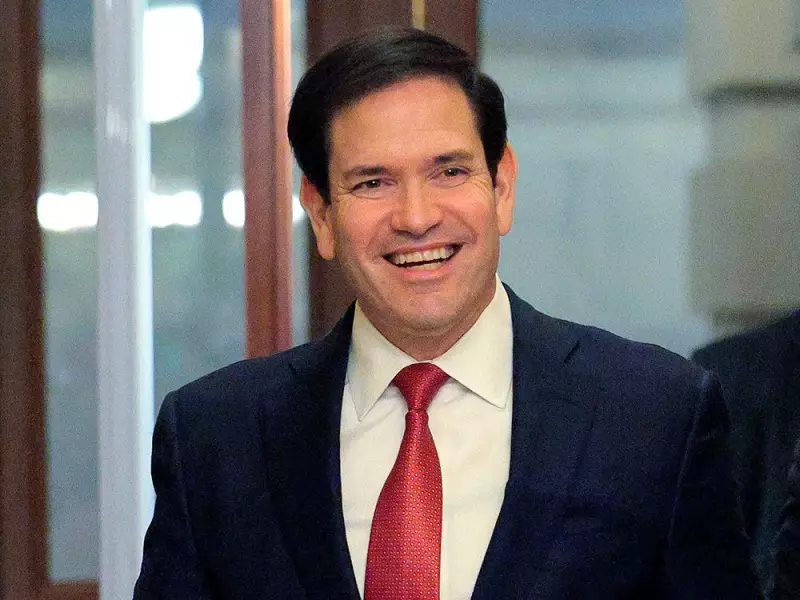
In a significant development in the ongoing Venezuela crisis, the White House has confirmed that U.S. Secretary of State Marco Rubio will take the lead in implementing wide-ranging economic and political reforms in the Latin American nation. This move follows the dramatic capture of former Venezuelan leader Nicolas Maduro.
Rubio to Head Major Reform Effort
Senior White House adviser Stephen Miller announced on Monday, January 5, 2026, that President Donald Trump personally requested Secretary Rubio to guide the process. Miller stated that the United States is receiving "full, complete and total" cooperation from the government in Caracas in the wake of Maduro's apprehension.
"It's a big team, a group of people — everybody's working great and closely together," Miller told reporters during a briefing at the White House. He added that Rubio will oversee a specialized team focusing on critical sectors, including energy, financial, and military policy.

Unclear Path Forward for Administration
Despite the announcement, the White House has provided scant details on the practicalities of administering Venezuela. The plan was set in motion after a daring raid that led to Maduro's capture. The former president pleaded not guilty on Monday to U.S. charges in a narco-terrorism case.
President Trump has offered only broad strokes, stating that the U.S. would "run" the country until new elections are held. He has also suggested that major oil producers are ready to invest billions to access Venezuela's vast crude oil reserves. In an interview with NBC News, Trump indicated the administration might subsidize energy companies to help rebuild the nation's crippled oil industry.
Complex Challenges and Key Players
Both the economic and political missions in Venezuela are expected to be fraught with complexity, leaving numerous policy questions unanswered. Secretary Rubio has largely avoided these specifics, hinting that U.S. influence would be exerted through economic pressure and the threat of further military action.
Intriguingly, Miller and Trump both asserted that Delcy Rodríguez, who was sworn in as Maduro's successor after serving as his vice president, is assisting U.S. efforts. This is despite her public condemnation of Maduro's capture.
"We are very much getting full, complete and total cooperation from the government of Venezuela," Miller reiterated, promising that the people of Venezuela would become richer and that the U.S. would benefit economically and militarily.
President Trump, in his NBC interview, dismissed speculation about prior coordination with Rodríguez. He emphasized the need to "fix the country" and "nurse the country back to health" before organizing new elections. He named other key figures in the Venezuela effort, including Defense Secretary Pete Hegseth and Vice President JD Vance.
The situation remains fluid, with the international community closely watching the unprecedented U.S. involvement in Venezuela's governance and the long-term implications for regional stability.