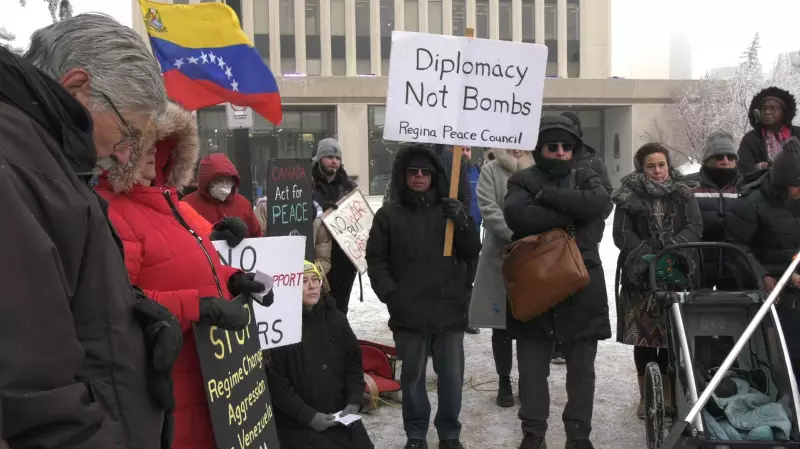
On a cold January day, a group of concerned citizens in Regina voiced their strong opposition to recent international events. On January 5, 2026, residents gathered for a rally to protest the United States' military action in Venezuela, which resulted in the capture of the country's president, Nicolás Maduro.
Voices of Dissent in the Prairie Capital
The demonstration served as a local point of resistance against what participants viewed as a destabilizing foreign intervention. Organizers and attendees expressed deep concern over the precedent set by the American operation, arguing it violated international sovereignty norms. The rally in Saskatchewan's capital highlighted how global political tensions can spark activism in Canadian communities far from the epicenter of the conflict.
A Local Response to a Global Shockwave
The capture of President Maduro by U.S. forces sent ripples across the world, including into Canadian political and economic discourse. The protest in Regina occurred alongside other reactions within Canada. For instance, Venezuelans in Ottawa held celebrations of Maduro's arrest, while Alberta Premier Danielle Smith cited the event as underscoring the urgency for a West Coast pipeline to diversify energy markets.

The U.S. move also pressured Canadian oil stocks, as new American designs for the Venezuelan oil industry threatened to alter global supply dynamics. These interconnected consequences show how a single military action can impact Canadian interests from finance to resource policy.
Broader Context and Canadian Perspectives
The rally was not an isolated opinion but part of a complex national conversation. Former Public Safety Minister Marco Mendicino drew parallels between Maduro's case and the historical precedent of Manuel Noriega, pondering how U.S. courts might handle the situation. Meanwhile, financial markets reacted, with Canadian and U.S. indices rising as the oil market came into sharp focus following the raid.
The event in Regina underscores a continuing Canadian engagement with international affairs, where citizens exercise their democratic right to assemble and question the actions of global powers, even when those events unfold thousands of kilometers away.