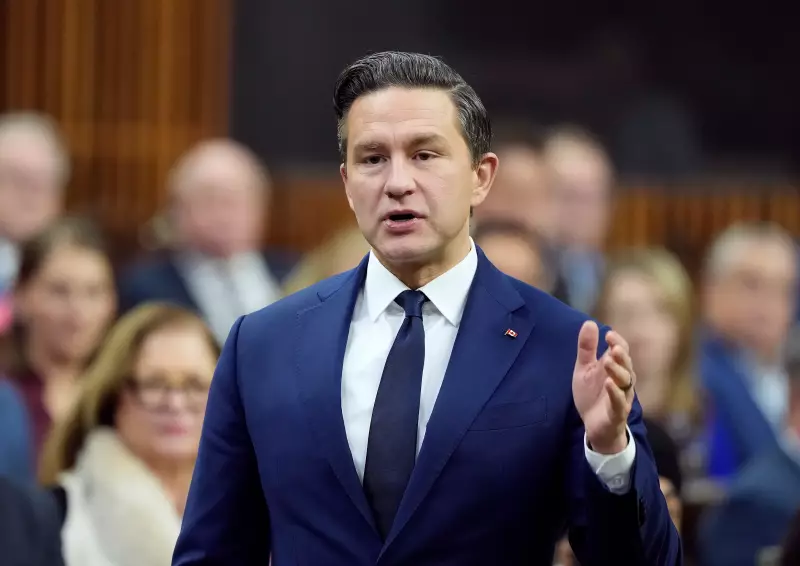
Conservative Party Leader Pierre Poilievre is drawing sharp criticism for his public support of a controversial military raid authorized by former U.S. President Donald Trump against Venezuela. The incident, which occurred in early January 2026, has sparked a debate about the implications for Canada's commitment to international law and diplomatic norms.
A Controversial Endorsement of Force
According to an opinion piece by Sharan Kaur published on January 06, 2026, Poilievre openly cheered the extraterritorial operation led by U.S. forces. The raid reportedly targeted Venezuelan leader Nicolás Maduro. U.S. officials informed lawmakers that Maduro and his wife sustained head injuries as they attempted to flee from the apprehending forces. By applauding this unilateral military action, Poilievre has positioned himself at odds with traditional Canadian foreign policy principles, which typically emphasize multilateralism and respect for national sovereignty.
Undermining Foundational Principles
Kaur's analysis argues that Poilievre's stance fundamentally undermines Canada's rule of law. The endorsement of a foreign military intervention, conducted without United Nations sanction or broad international consensus, sets a dangerous precedent. It signals a potential shift away from the rules-based international order that Canada has helped build and champion for decades. This move is seen not just as a foreign policy comment, but as a challenge to the legal and diplomatic frameworks that guide Canadian statecraft.

The timing of Poilievre's remarks is particularly notable amidst other significant political developments. The analysis was published alongside news that Deputy Prime Minister Chrystia Freeland has resigned her seat as a Member of Parliament. Former Bank of Canada Governor Mark Carney commented that Freeland's resignation is consistent with her potentially taking on a role as an adviser on Ukraine, following Canada's co-signing of a pact to help secure the nation after a peace deal.
Broader Political and Economic Context
The political landscape in early 2026 is complex. Prime Minister Justin Trudeau was on a trip to Paris, while Carney also noted that Canadian oil would remain competitive following the ouster of Maduro in Venezuela. Poilievre's vocal support for Trump's aggressive tactic appears to align him with a more interventionist and populist approach to global affairs, contrasting with the current government's stance. This divergence highlights a deepening ideological rift on how Canada should engage with an increasingly volatile world.
Critics contend that a Canadian political leader celebrating a foreign power's raid on another country's soil, regardless of the target's reputation, erodes the country's moral authority and legal consistency. It raises questions about the values that would guide a future government under Poilievre's leadership, especially concerning the use of force and adherence to international law.
As the debate continues, Poilievre's comments on Venezuela stand as a defining moment, forcing a conversation about the direction of Canadian foreign policy and the enduring importance of the rule of law in an era of geopolitical upheaval.