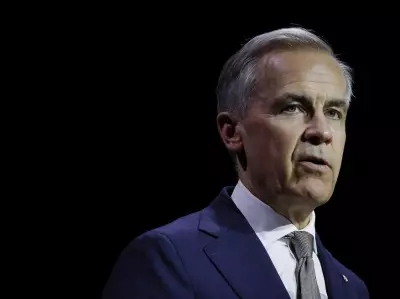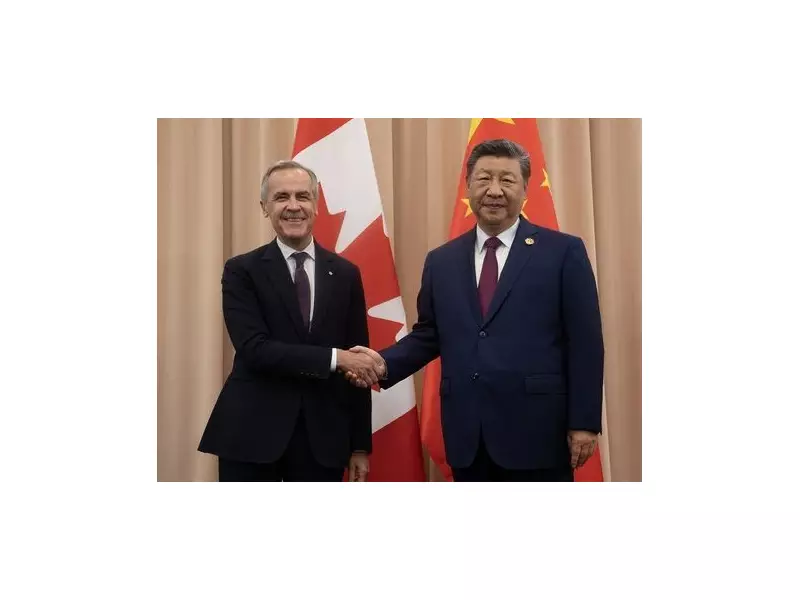
Prime Minister Mark Carney is set to travel to Beijing later this month, accepting an invitation from Chinese President Xi Jinping in a significant move to thaw the deeply frosty relations between Canada and China.
A Delicate Diplomatic Mission
The visit, scheduled for the week of January 13 to 21, 2026, will be the first stop on a three-country tour that will also see Carney travel to Doha, Qatar, and attend the World Economic Forum in Davos, Switzerland. While not yet formally announced by the Prime Minister's Office, the trip was revealed through an internal media advisory posted on social media by Conservative MP Shuv Majumdar, who criticized the prime minister's priorities.
This journey marks Carney's second overseas trip in 2026 and follows a pivotal 40-minute meeting with President Xi on the sidelines of the APEC summit in late 2025. Carney described that encounter as a "turning point" in the bilateral relationship, which had deteriorated sharply under the previous government.

Navigating a Legacy of Tension
Relations between Ottawa and Beijing reached a historic low during Justin Trudeau's tenure as prime minister. The flashpoint was the December 2018 abduction of Canadians Michael Spavor and Michael Kovrig—known as the "Two Michaels"—in retaliation for Canada's arrest of Huawei CFO Meng Wanzhou on a U.S. extradition request.
Even after a diplomatic resolution secured the release of all three individuals in September 2021, tensions persisted. In 2024, Canada imposed a 100% tariff on Chinese-made electric vehicles, followed by a 25% levy on Chinese steel and aluminum. Beijing retaliated with heavy tariffs on Canadian agricultural products, including a punishing 100% duty on Canadian canola and pulse exports.
The trade friction is compounded by serious allegations of Chinese espionage within Canada, election interference, and intimidation tactics, alongside ongoing concerns over China's military activities near Taiwan and in the South China Sea.
The U.S. Factor and Strategic Balancing Act
While mending ties with a major economic partner is a priority for the Carney government, experts caution that the trip's optics are critical, especially regarding Canada's most important ally: the United States.
"The challenge for Canada is ensuring this visit is seen as transactional and limited, not strategic, and that it reinforces rather than complicates our core relationship with the United States," said Alan Kessel, a former Canadian diplomat and senior fellow with the Macdonald-Laurier Institute. He warned that a Canadian leader visiting Beijing while Washington tightens its strategic posture could be misinterpreted as hedging.
Eric Miller, a fellow with the Canadian Global Affairs Institute, noted the visit gains added importance amid growing uncertainty over the future of the Canada-United States-Mexico Agreement (CUSMA). "All of it reinforces the idea to the Carney government that they need to accelerate as quickly as possible the process of trade diversification," Miller stated.
Potential areas for economic reset discussed by analysts include resolving the tariffs on Canadian canola and seafood, such as the 25% duty on maritime lobsters. However, Kessel emphasized that under a potential second Trump administration, diplomatic nuance is often lost, making the symbolism of the trip unavoidable.
The Prime Minister's Office has declined to comment on the specifics of the upcoming visit, leaving the details of this high-stakes diplomatic reset to unfold later this month.