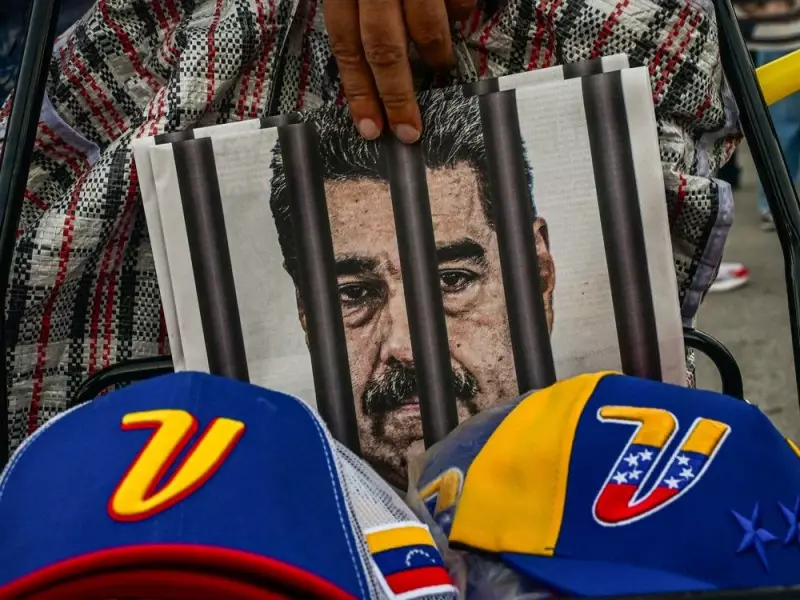
In a stunning geopolitical escalation, former Venezuelan President Nicolas Maduro is set to appear before a federal court in New York on Monday, following his capture by U.S. forces in a dramatic weekend assault on Caracas. The event underscores President Donald Trump's bold declaration that the United States is now "in charge" of Venezuela and its vast oil reserves.
A Shock Military Operation
The 63-year-old leftist leader, along with his wife, was seized and extracted from Venezuela's capital on Saturday in a complex U.S. military operation. The mission reportedly involved commandos, airstrikes by jet planes, and a massive naval deployment off the Venezuelan coast. Both Maduro and his spouse now face serious narcotrafficking charges in the American judicial system.
The operation has sent shockwaves through the international community. In response, the UN Security Council has called an emergency session for Monday at Venezuela's request, where global concerns over U.S. intentions in the nation of approximately 30 million people are expected to be aired.

Trump's "In Charge" Doctrine and a Shift in Caracas
President Trump left little doubt about his administration's objectives. "We're in charge," he announced late Sunday, framing the intervention as a step toward dominating Venezuela's resources. He elaborated that the U.S. needs "total access" to Venezuelan oil and other assets to facilitate the country's rebuilding.
In a significant development, Maduro's successor and interim leader, Delcy Rodriguez, appears to be adopting a conciliatory stance. After initially using fiery rhetoric, Rodriguez issued a statement late Sunday offering to work with the Trump administration on a cooperative agenda. This shift came just hours after Trump warned she would pay a "very big price, probably bigger than Maduro" if she resisted U.S. demands.
What Comes Next? U.S. Strategy and Global Reaction
Despite the removal of Maduro, the future of Venezuela remains highly uncertain after a quarter-century of socialist rule under him and his predecessor, Hugo Chavez. The White House has indicated it does not seek a wholesale regime change but rather a pliant government that aligns with U.S. interests, even if it includes former associates of Maduro.
Secretary of State Marco Rubio clarified the U.S. position on Sunday, stating Washington is not immediately pushing for a radical overhaul or a rapid return to democracy. "We're going to make an assessment on the basis of what they do," he told CBS News, suggesting a pragmatic, step-by-step approach focused on compliance.
This strategy effectively sidelines the traditional Venezuelan political opposition, which the Trump administration believes was cheated out of electoral victory by Maduro. Domestically, the action has sparked concern, with Senate Democratic leader Chuck Schumer saying Americans were left "scratching their heads in wonderment and in fear."
While U.S. ground forces have reportedly withdrawn from Venezuelan territory, a formidable naval presence, including an aircraft carrier, remains stationed off the coast. The Trump administration continues to wield significant economic power through a blockade on Venezuelan oil tankers and has threatened further military action if necessary.