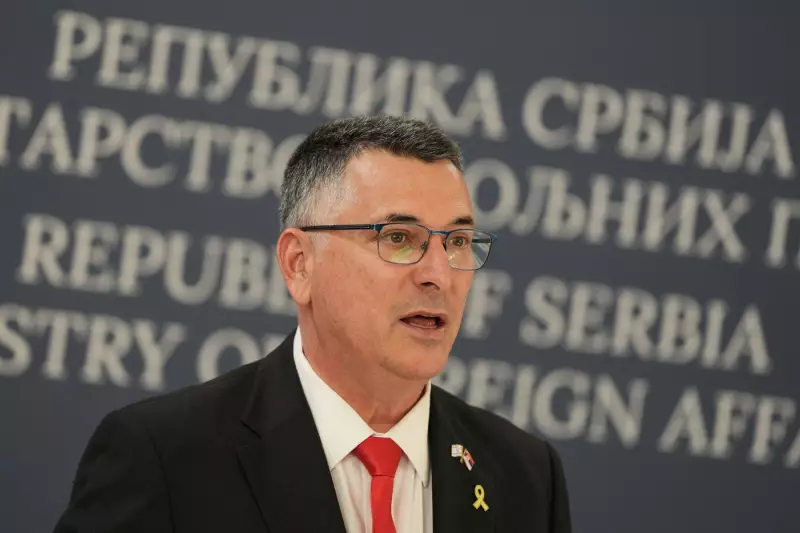
In a significant diplomatic move that is reshaping alliances in the Horn of Africa, Israel's Foreign Minister Gideon Saar has conducted an official visit to the breakaway territory of Somaliland. The trip, which took place in early January 2026, follows Israel's controversial decision to recognize Somaliland's independence—a stance that directly challenges the sovereignty of the Federal Republic of Somalia and has ignited regional tensions.
A Contentious Recognition Precedes the Visit
The high-profile visit by Foreign Minister Saar was not an isolated event but the direct consequence of a major policy shift. Israel formally recognized Somaliland as an independent state in late 2025, a decision that was met with immediate condemnation from the Somali government in Mogadishu and concern from several African Union member states. Somalia maintains that Somaliland is an integral part of its territory, despite the region having declared independence in 1991 and functioning with its own government, currency, and security forces for over three decades.
This recognition places Israel at the center of one of Africa's most protracted territorial disputes. Analysts suggest the move is driven by Israel's strategic interests in securing access to the Gulf of Aden and the Red Sea, vital maritime corridors. Somaliland's port of Berbera offers a potential strategic foothold, countering influence from regional rivals.

Details of the Diplomatic Mission
During his visit, Foreign Minister Gideon Saar met with Somaliland's President Muse Bihi Abdi and other senior officials. The discussions reportedly focused on solidifying bilateral relations, enhancing security cooperation, and exploring economic partnerships. Key areas of mutual interest include agriculture technology, cybersecurity, and water management—fields where Israeli expertise is sought after globally.
The visit signals a deepening of ties that have been quietly developing for several years. Prior to recognition, there were reports of informal exchanges and potential security arrangements. Saar's public trip, however, marks a new, overt phase in the relationship, demonstrating Israel's commitment to treating Hargeisa, Somaliland's capital, as the seat of a sovereign nation.
Regional Repercussions and International Response
The diplomatic maneuver has significant consequences for the volatile Horn of Africa region. Somalia has recalled its ambassador to Israel for consultations and is expected to lobby the African Union and the Arab League to reject Israel's decision. Neighboring Ethiopia, which has its own complex relationship with Somaliland regarding port access, is watching developments closely.
Internationally, the move is seen as testing the long-standing principle of African Union solidarity regarding border integrity inherited from the colonial era. Major global powers, including the United States and the European Union, continue to recognize Somalia's territorial unity and have not followed Israel's lead. This creates a complex diplomatic landscape where Somaliland gains a powerful, though controversial, ally while remaining largely isolated on the world stage.
The visit and the recognition that preceded it underscore a more assertive Israeli foreign policy in Africa, seeking new partnerships beyond traditional allies. For Somaliland, the engagement offers a potential path to greater economic development and a bolstering of its long quest for legitimacy. However, it also risks escalating tensions in an already unstable region and complicating ongoing efforts for dialogue between Somaliland and Somalia.