Tehran has issued a stark warning to the United States following former President Donald Trump's pledge to support Iranian protesters, threatening retaliation against American forces and regional destabilization.
Trump's 'Locked and Loaded' Post Sparks Diplomatic Crisis
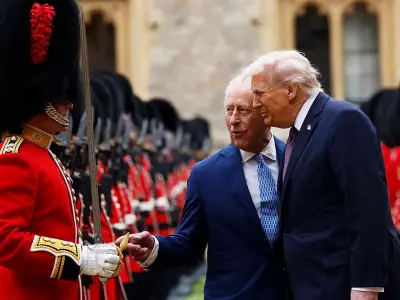
In an early-morning post on Truth Social on Friday, January 2, 2026, Donald Trump suggested the U.S. was prepared to aid protesters in Iran if authorities cracked down on ongoing unrest. The former president stated, "If Iran shots and violently kills peaceful protesters, which is their custom, the United States of America will come to their rescue. We are locked and loaded and ready to go."
Trump's comments rhetorically injected his administration into a wave of demonstrations across Iran, triggered by a crashing currency and soaring prices. He did not specify potential actions, and the White House did not immediately comment.

Iran's Sharp Retort and Warning of Consequences
The response from Iran was swift and severe. Ali Larijani, the head of Iran's Supreme National Security Council, responded on the social media platform X, cautioning the U.S. to "be mindful of their soldiers' safety."
Larijani, a veteran politician, delivered a clear threat: "Trump should know that U.S. interference in this internal matter would mean destabilizing the entire region and destroying America's interests." He attempted to draw a distinction between legitimate economic grievances and what he called "the actions of disruptive actors."
The warning directly implicates the U.S. military presence in Iraq and the Persian Gulf, indicating potential targets for Iranian retaliation.
Unrest Rooted in Economic Collapse
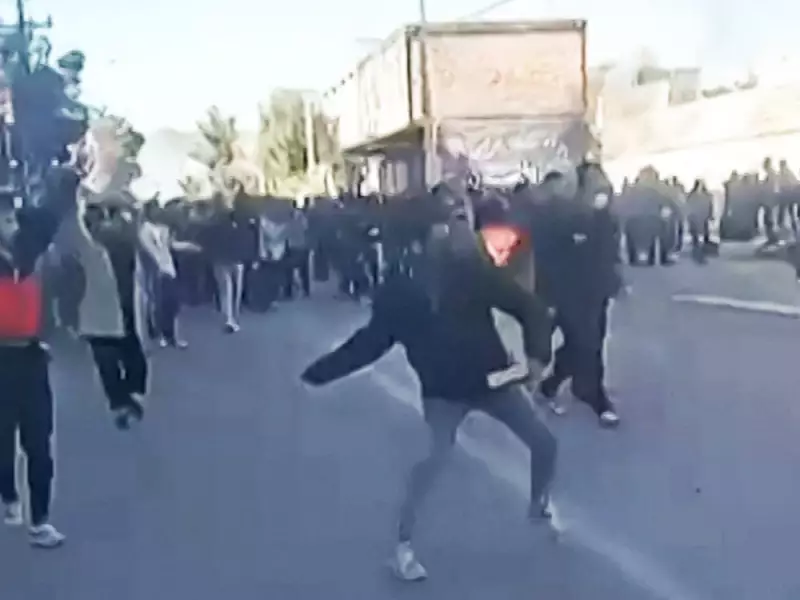
The protests erupted after the Iranian rial crashed to a record low on Sunday, December 28, 2025, exacerbating a severe economic crisis fueled by international sanctions. Demonstrations over the currency slump and high prices spread from Tehran to cities nationwide.
At least seven people have been killed in clashes across four Iranian cities, according to the Associated Press. In Fasa, a south-central city of about 150,000, protesters stormed the governor's office, set fires, and threw rocks, as shown by state-affiliated Nour News.
The unrest persisted despite attempts at appeasement by Iranian President Masoud Pezeshkian, who pledged to revise planned tax increases and called some demands for change legitimate.
A Pattern of Threatening Military Action
Trump's latest comments on Iran fit a pattern of threatening targeted military operations to protect perceived U.S. interests without engaging in prolonged wars. Analysts note his administration has previously threatened or conducted strikes on Iran's nuclear program, Houthi rebels in Yemen, alleged narco-traffickers in the Caribbean, and targets in Venezuela.
Michael O'Hanlon, director of foreign policy research at the Brookings Institution, suggested Trump may be emboldened by past actions. "Trump watched Netanyahu and the United States strike Iran and Iran's allies in various ways in the last two years that achieved a lot of effects with limited risk, so far at least," O'Hanlon said. "And maybe that makes him a little bit overconfident that he can threaten these kinds of uses of force."
This incident marks the second time in a week Trump has threatened Iran, having also issued warnings over its nuclear weapons program. The escalating rhetoric sets the stage for a dangerous confrontation, with Iran's leadership framing any U.S. action as a direct assault on its sovereignty and a trigger for wider regional conflict.