Iran Issues Stark Warning to U.S. Over Potential Military Action
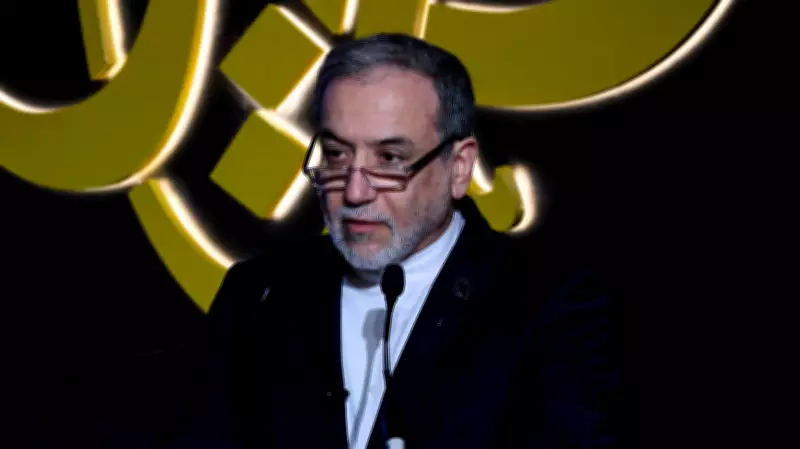
In a significant escalation of regional tensions, Iran has explicitly threatened to strike American military installations across the Middle East if the United States launches an attack against the Islamic Republic. The warning was delivered by Iranian Foreign Minister Abbas Araqchi during an interview with Qatar's Al Jazeera television network on Saturday, February 7.
Diplomatic Context and Nuclear Negotiations
The stark warning comes against a backdrop of renewed diplomatic efforts. Both Tehran and Washington have expressed a willingness to continue indirect negotiations concerning Iran's nuclear program, following what were described as positive discussions held in Oman on Friday. While no specific date has been finalized for the next round of talks, U.S. President Donald Trump indicated they could commence early next week, a sentiment echoed by Araqchi who stated, "We and Washington believe it should be held soon."
However, the diplomatic path remains fraught with preconditions and historical grievances. President Trump has previously threatened military action against Iran, citing the need for the country to abandon uranium enrichment activities—a potential pathway to nuclear weapons—halt its ballistic missile development, and cease support for armed groups throughout the region. Iran has consistently denied any intention to weaponize its nuclear fuel production.

A Firm Stance on the Scope of Talks
Despite the openness to dialogue, Foreign Minister Araqchi firmly rejected any expansion of the negotiation agenda beyond the nuclear issue. "Any dialogue requires refraining from threats and pressure. (Tehran) only discusses its nuclear issue ... We do not discuss any other issue with the U.S.," he asserted. This position underscores Iran's demand for the recognition of its right to enrich uranium and its refusal to place its missile program on the table, arguing that doing so would leave the nation vulnerable to attacks from Israel.
The Threat of Retaliation and Historical Precedent
Araqchi's warning was not an abstract threat but was framed with reference to recent history. In June of the previous year, the United States participated in the final stages of a 12-day Israeli bombing campaign targeting Iranian nuclear facilities. Iran's response at that time included a missile attack on a U.S. base located in Qatar, a nation that maintains diplomatic relations with both Tehran and Washington.
The foreign minister made it clear that a new American attack would elicit a similar retaliatory response. "It would not be possible to attack American soil, but we will target their bases in the region," Araqchi stated. He carefully delineated this action from an attack on host nations, emphasizing, "We will not attack neighbouring countries; rather, we will target U.S. bases stationed in them. There is a big difference between the two."
Regional Implications and Strategic Calculus
This declaration highlights the volatile security dynamics in the Middle East, where U.S. military assets are often stationed in allied countries. The threat places host nations in a precarious position, caught between their alliance with Washington and the risk of becoming collateral damage in a broader conflict. Iran's strategy appears calculated to deter U.S. aggression by promising direct, localized consequences without necessarily sparking a wider regional war by attacking sovereign states.
The situation remains fluid as both sides navigate a delicate balance between diplomatic engagement and military posturing. The outcome of the forthcoming indirect talks will be crucial in determining whether the path forward leads toward de-escalation or a further hardening of positions that could increase the risk of military confrontation.