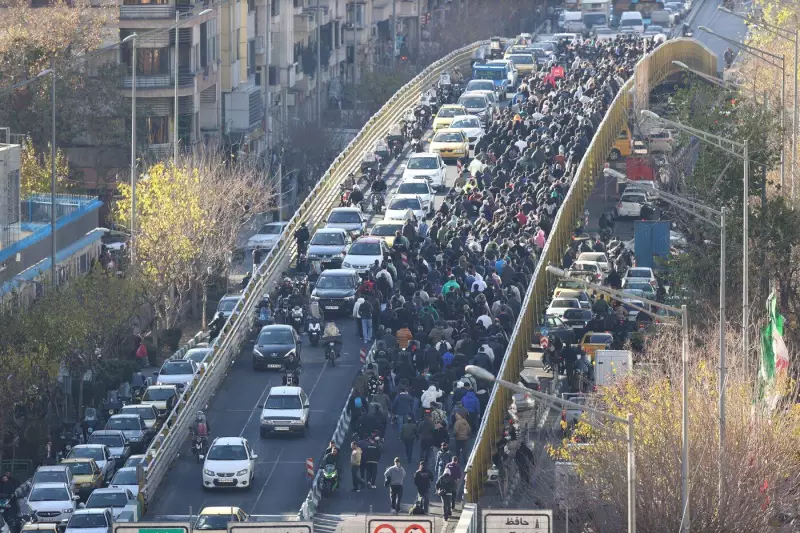
Protests have once again erupted across Iran, shaking the capital of Tehran and other cities as long-simmering public discontent collides with heightened international tensions over the country's nuclear program. The demonstrations, captured in images like those from a bridge in Tehran on December 29, 2025, underscore a period of significant instability.
The Spark and Scale of the Demonstrations
While the specific catalyst for the latest wave of protests is part of a complex domestic landscape, their occurrence coincides with a delicate international moment. Global powers remain deeply concerned about Iran's nuclear ambitions, creating a backdrop of high-stakes diplomacy and potential conflict. The protests, therefore, are not happening in a vacuum but within a climate of both internal pressure and external scrutiny.
The visual evidence from late December shows significant public mobilization. On December 29, 2025, protesters were documented marching across a key bridge in Tehran, a symbolic and visible act of defiance. These scenes indicate a persistence of the protest movements that have periodically flared up in the country in recent years, challenging the government's authority.

International Repercussions and Diaspora Response
The situation in Iran resonates far beyond its borders, including within Canada. The Canadian government, alongside its allies, is closely monitoring the dual crises of civil unrest and nuclear brinkmanship. Foreign policy analysts suggest that the internal protests could influence the regime's calculations on the international stage, potentially making it more defiant or, conversely, more seeking of relief from economic pressures.
The diaspora in Canada has been actively responding to the events. In Vancouver, Iranian-Canadians gathered at the Vancouver Art Gallery to rally in solidarity with those protesting inside Iran. This demonstrates how the unrest directly impacts Canadian communities and sparks civic engagement within the country, linking international events to local activism.
A Tense Future for Iran and Global Politics
The convergence of widespread domestic protests and unresolved nuclear tensions presents one of the most significant challenges to Iran's leadership in recent times. The government must navigate suppressing internal dissent while managing a hostile international environment focused on curtailing its nuclear capabilities. This balancing act is fraught with risk and could lead to sudden escalations in either domain.
For international observers and governments, including Canada, the priority is assessing how these twin crises will evolve. The protests highlight deep-seated issues within Iranian society, while the nuclear standoff threatens regional and global security. The coming weeks will be critical in determining whether the regime can quell the street demonstrations and what concessions, if any, it might make in nuclear negotiations to secure economic relief.
The world is watching a nation at a crossroads, where the demands of its people on the streets and the demands of world powers in diplomatic chambers are creating an unprecedented pressure cooker. The outcome will have lasting implications for the Middle East and international relations.