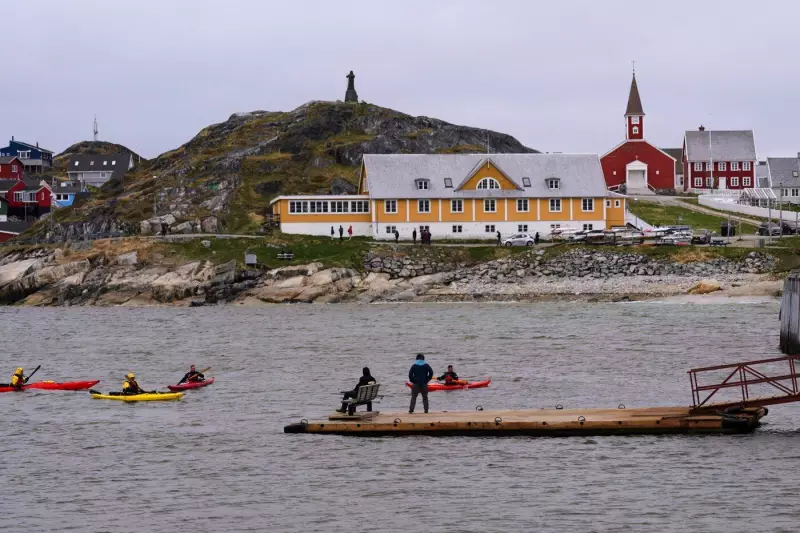
Political leaders across Greenland have delivered a unified and forceful rejection of former U.S. President Donald Trump's push to bring the vast Arctic island under American control. The rebuke comes in response to Trump's renewed interest in the strategic territory, an idea he first floated during his presidency.
A Firm and Unified Rejection
The response from Greenland's party leadership was swift and unequivocal. Leaders from multiple political factions have made it clear that the island's future remains firmly in the hands of its own people and its current relationship with the Kingdom of Denmark. Greenland, while self-governing, handles its domestic affairs, but Denmark retains control over foreign and defense policy. The consensus among local politicians is that any discussion of a transfer of sovereignty is not open for negotiation.
This stance underscores a deep-seated commitment to Greenland's path toward greater independence on its own terms, rather than through annexation by another power. The proposal is seen as a direct challenge to the island's political autonomy and the will of its population.

Strategic Interests in the Arctic
Analysts point to the rapidly changing geopolitical landscape of the Arctic as a key driver behind the persistent interest from figures like Trump. As climate change opens new shipping routes and access to untapped natural resources, the region's strategic value has skyrocketed. Greenland itself possesses significant deposits of rare earth minerals and potential oil and gas reserves.
Control over Greenland would offer the United States a dominant position in the North Atlantic and the Arctic, a fact not lost on Washington's strategic planners. However, this realpolitik calculation clashes directly with the aspirations and sovereignty of the island's inhabitants.
Historical Context and Lasting Implications
The notion of the United States purchasing Greenland is not new; it was famously attempted by President Harry Truman in 1946. Trump's public musings about buying the island during his first term were widely mocked at the time but highlighted a consistent thread of American interest. The renewed push in early 2026 suggests the idea remains alive in certain political circles.
The firm rejection from Greenlandic leaders is likely to resonate across the international community, particularly among allies who view the Arctic as a zone for cooperation rather than unilateral territorial expansion. It also reinforces the principle that the futures of indigenous and autonomous peoples cannot be decided by external powers through real estate transactions.
This episode serves as a stark reminder of the ongoing tensions between great-power ambitions and local self-determination in an increasingly contested polar region. For now, Greenland's message is clear: its land is not for sale.