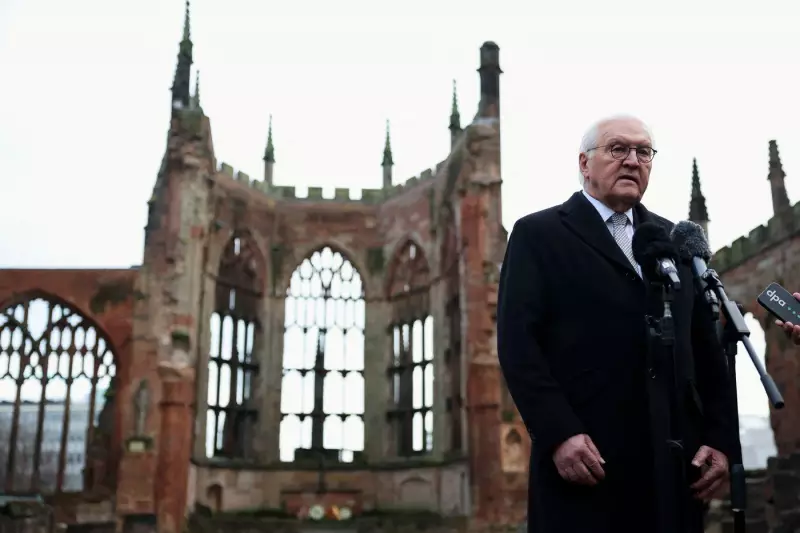
In a powerful gesture of historical reconciliation and present-day solidarity, Germany's President Frank-Walter Steinmeier concluded a state visit to the United Kingdom on Friday, December 5, 2025, with a poignant stop at a landmark site of Second World War devastation.
A Symbolic Visit to Coventry's Ruins
President Steinmeier spoke to media on the grounds of the old Coventry Cathedral in England, a structure famously destroyed by German Luftwaffe bombing during the war. The visit to the preserved ruins, which stand next to the modern cathedral built after the conflict, carried profound symbolic weight. It served as a stark reminder of Europe's fractured and violent past, deliberately contrasted against the continent's current efforts to present a unified front against a common challenge.
The timing of the state visit is highly significant, occurring as European nations seek to bolster a united stance against Russia. Steinmeier's presence at a location representing the horrors of a previous European war underscores the contemporary imperative for alliance and peace. The German president's role, largely ceremonial but deeply symbolic, is pivotal in fostering diplomatic ties and reinforcing shared values among European partners.

Context of European Solidarity
This diplomatic mission comes at a critical juncture for European security policy. The trip, culminating in the Coventry visit, is widely interpreted as part of a broader initiative to strengthen the bonds between key European powers. By acknowledging the scars of history together, leaders aim to solidify the political and moral foundation for collective action in the face of ongoing aggression in Eastern Europe.
The final day of the state visit, December 5, 2025, was marked by this reflective moment. The imagery of the German head of state at the Coventry ruins, a site synonymous with wartime suffering inflicted by his nation, was carefully chosen. It projects a message of enduring partnership, learned lessons, and an unwavering commitment to a peaceful, collaborative European future.
Reinforcing the Transatlantic Alliance
Analysts view such high-profile diplomacy as essential for maintaining a cohesive transatlantic response to global threats. The visual and rhetorical symbolism of the Coventry event reinforces the narrative that historical adversaries have become inseparable allies. This unity is considered paramount for the stability and security of the region as geopolitical tensions persist.
President Steinmeier's visit ultimately transcends mere ceremony. It acts as a diplomatic reaffirmation of the post-war order and a clear signal that core European nations like Germany and the United Kingdom remain aligned on fundamental principles of sovereignty and collective defence, despite other political differences.