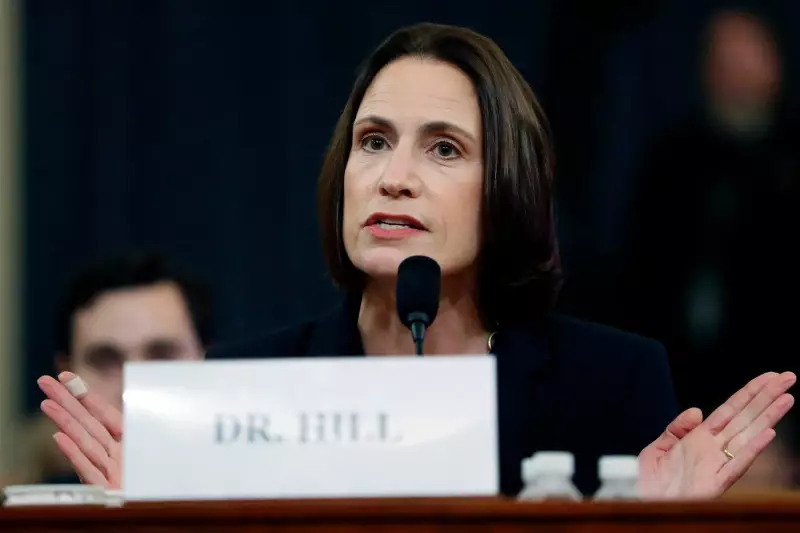
In a significant revelation about high-stakes geopolitics, former White House national security aide Fiona Hill has disclosed that Russia once proposed a startling quid pro quo to the United States. According to Hill's testimony, Russian officials suggested the U.S. could have "free rein" in Venezuela if it ceased its support for Ukraine against Russian aggression.
The Details of the Proposed Geopolitical Trade
The offer, which Hill described as part of her testimony, reportedly emerged during diplomatic engagements. The core of the proposal was a clear exchange: Moscow would effectively cede influence in Venezuela to Washington, allowing American policy to dominate there, in return for the U.S. stepping back from its backing of Kyiv. This would have represented a major shift in the strategic balance of two separate but globally significant conflicts.
Hill, who served as a top Russia adviser to former President Donald Trump, brought this information to light. The context dates back to at least November 21, 2019, when she was a key witness during impeachment proceedings before the House Intelligence Committee. Her recent statements have provided new depth to the understanding of behind-the-scenes negotiations between the world powers.

Implications for U.S. Foreign Policy and Global Alliances
This revelation sheds light on the complex and often transactional nature of international relations pursued during that era. The proposal essentially asked the U.S. to choose between two spheres of influence: abandoning a democratic ally in Eastern Europe to gain an upper hand in Latin America. Such a deal would have had profound consequences for global security architecture and America's standing with its NATO partners.
Analysts suggest the offer was likely intended to test U.S. resolve and potentially drive a wedge between American and European interests. It underscores the lengths to which the Kremlin was willing to go to secure its objectives in Ukraine, a nation it has long considered within its strategic orbit. The fact that the proposal was made highlights the interconnectedness of global crises, where actions in one region are frequently used as bargaining chips in another.
Broader Context and Lasting Impact
Hill's disclosure arrives amidst ongoing scrutiny of foreign policy decisions from the Trump administration. It adds a critical piece to the puzzle of how major powers negotiate behind closed doors. The offer, which was apparently not accepted, illustrates the persistent Russian strategy of using regional conflicts as leverage in a broader great-power competition.
For Canada, a steadfast ally of Ukraine and a nation deeply invested in the rules-based international order, this news reinforces the importance of vigilance in global affairs. It serves as a reminder of the complex diplomatic maneuvers that can occur, often away from public view, and which can directly impact allied nations' security and interests.