

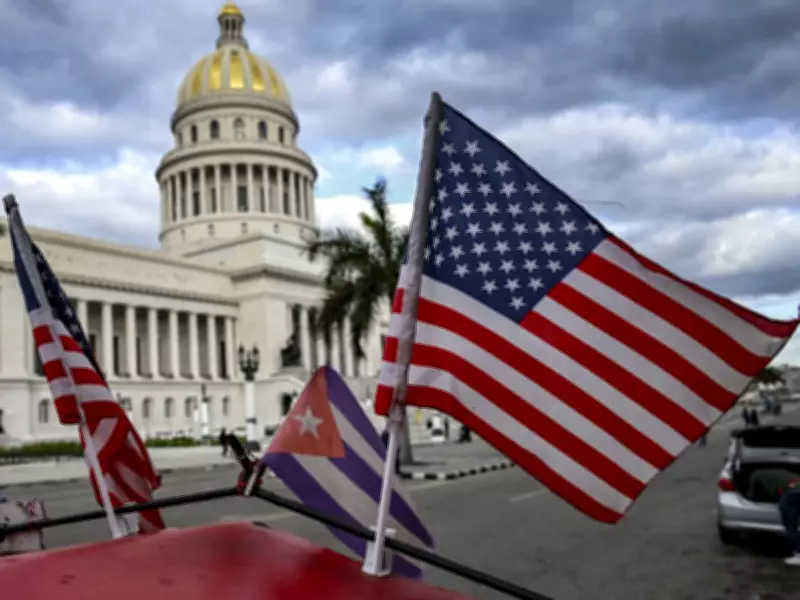
Cuba's Deepening Crisis: Will Trump's Pressure Campaign Force Regime Change?
In the shadow of Havana's grand boulevards, where crumbling mansions stand as relics of a bygone era, a stark new reality is unfolding. Carlos, his hands emaciated from hunger, sifts through a heap of rubbish on a side street, meticulously picking at a chicken bone for any remaining scraps of meat. "The state gives us nothing," he says quietly. "Now we are fending for ourselves."
Unprecedented Scenes of Scarcity
Across communist Cuba, scenes once considered unthinkable are becoming commonplace as food supplies vanish from state-controlled shops and hunger spreads through neighborhoods. The island nation, which has defiantly resisted Washington for six decades, now faces its most severe crisis in generations.
The Trump administration, fresh from seizing Venezuela's revolutionary socialist ruler Nicolás Maduro in a commando raid last month, has intensified pressure on Cuba's few remaining allies to cut off fuel supplies completely. This strategic move has brought the Caribbean nation to the brink of collapse.

Fuel Shortages Paralyze Daily Life
The consequences of the fuel blockade are visible everywhere in Havana:
- Queues of cars snake through streets as drivers wait hours for dwindling gasoline supplies
- Oil-fired power stations sit idle for increasingly long stretches to conserve fuel
- Airlines have been informed that no kerosene remains for their aircraft
- Rubbish accumulates in streets as collection trucks lack fuel to operate
"The Americans are deliberately creating a humanitarian crisis in a country which never had one," says a Latin American diplomat stationed in Havana. "This is war waged by other means."
Diplomatic Warnings of Catastrophe
United Nations officials and foreign diplomats on the island express growing alarm about potential epidemics and widespread starvation. The combination of food shortages, limited medical supplies, and deteriorating sanitation conditions creates what experts describe as a perfect storm for humanitarian disaster.
Under mounting pressure both domestically and internationally, Cuban President Miguel Díaz-Canel has begun showing signs of flexibility. Last week, he announced readiness for talks with the United States "without preconditions and from a position of equals."
Washington's Calculated Strategy
President Donald Trump confirmed the diplomatic opening on January 31, stating: "We're starting to talk to Cuba. It doesn't have to be a humanitarian crisis. I think they probably would come to us and want to make a deal... We'll be kind."
This represents a calculated shift in strategy from an administration that has maintained consistently hardline positions toward communist governments throughout Latin America. The question now facing analysts is whether Havana's famously stubborn leadership, which has ruled the one-party state for 67 years, can appease Washington's demands for regime change before the island succumbs to disease or starvation.
Historical Context and Self-Inflicted Wounds
Cuba's confrontation with Washington dates to 1959, when Fidel Castro and his revolutionaries overthrew U.S.-backed dictator Fulgencio Batista, establishing a communist government just 100 miles from Florida. Yet Havana enters this latest showdown in its weakest position ever.
While the U.S. embargo on trade—in place since 1962—has damaged Cuba's economy for decades, many of the country's current problems stem from self-inflicted wounds and policy missteps:

- Once among the world's leading sugar exporters, Cuba now imports the sweetener from Brazil due to dramatically reduced harvests
- When COVID-19 struck, Havana imposed prolonged strict lockdowns that devastated the tourist industry, eliminating crucial foreign exchange earnings
- Economic mismanagement and resistance to market reforms have compounded structural weaknesses
The combination of external pressure and internal vulnerabilities has created what observers describe as Cuba's most precarious moment since the collapse of the Soviet Union. As fuel supplies continue to dwindle and hunger becomes more widespread, the question remains whether the regime's legendary resilience will prove sufficient against Washington's determined pressure campaign.





