Cuban Ambassador Accuses U.S. of Attempting Regime Change Through Oil Blockade
Cuba's ambassador to Canada has delivered a stark warning to Canadian lawmakers, accusing the United States of deliberately attempting to overthrow his country's communist government through a crippling oil blockade. Ambassador Rodrigo Malmierca Diaz addressed the House of Commons foreign affairs committee in Ottawa on Tuesday, February 24, 2026, framing the U.S. sanctions as an act of "collective punishment" against the Cuban people.
"An Unjustifiable Crime" Against a Nation
In his testimony, Ambassador Malmierca Diaz condemned the U.S. actions as a severe violation of international norms. "One may disagree with the country's political project, but there is no right whatsoever that justifies a great power ... attempting to achieve its objectives by suffocating an entire people," he stated emphatically. He characterized the oil blockade as an "unjustifiable crime" designed to inflict maximum suffering on Cuba's civilian population.
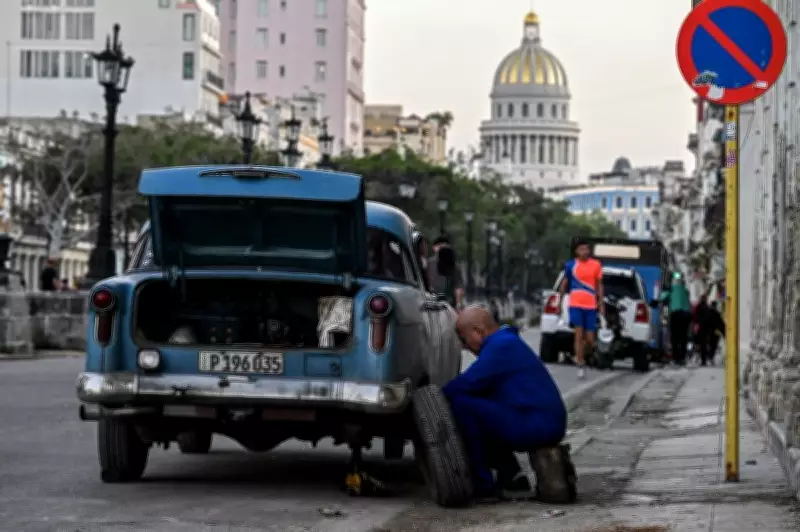
The ambassador detailed how the fuel shortages are having devastating real-world consequences. He reported that thousands of kidney dialysis patients are unable to receive critical care due to the lack of energy, and food distribution to various regions has been severely disrupted. "Without energy, every aspect of life in a country is affected — food distribution, public health, transportation, education," Malmierca Diaz explained. He asserted that the U.S. strategy is clear: "To create a humanitarian crisis and try to force regime change through it."

U.S. Strategy and Military Pressure
The ambassador further alleged that Washington is taking aggressive steps to enforce the blockade, including efforts to "exercise military control over the traffic of vessels arriving in Cuba." This claim is supported by reports from news outlets that American forces have been following oil ships as they approach the island nation. Officials close to former U.S. President Donald Trump have previously stated that the administration believed such pressure could destabilize and ultimately topple the Cuban regime.
Canadian Assessment: A "Quite Stable" Government
Despite the dire situation described by the Cuban ambassador, a senior Canadian official offered a contrasting assessment of the regime's stability. Mark Richardson, the Global Affairs Canada official responsible for Caribbean policy, told the committee that the Cuban government appears resilient. "Despite the lack of fuel being imported due to the U.S. measures in particular, what I can say is that the Cuban government appears to be quite stable," Richardson stated.
He elaborated that the government has "developed itself through all areas of the economy and society in Cuba and shows no indication of being unstable at this time." This official Canadian perspective suggests that while the humanitarian impact is severe, the political structure in Havana remains intact.
International Response and Calls for Canadian Aid
The crisis has prompted calls for international assistance. Mexico has already sent shipments of food and medicine to Cuba, and within Canada, the Bloc Quebecois and the New Democratic Party (NDP) are urging the federal government to follow suit. Foreign Affairs Minister Anita Anand indicated this week that Ottawa is preparing to announce a plan to assist Cuba, though she declined to specify the nature of the aid. "I will have an announcement in the coming days," Anand said on Tuesday.
Internal Trade Minister Dominic LeBlanc had previously confirmed earlier in February that the government was working on a relief plan. The need is acute; Cuba produces only 40% of the fuel it requires, making it exceptionally vulnerable to blockades. The shortages have become so severe that Air Canada and other airlines have cancelled flights to the island due to a lack of aviation fuel.

Roots of the Crisis and Global Condemnation
The current fuel crisis stems from a series of geopolitical actions. Shipments from Venezuela were halted after the U.S. intervened to remove that country's leader. Subsequently, Mexico ceased its oil exports to Cuba after the Trump administration threatened to impose tariffs on any nation selling oil to the island. These moves, combined with intensifying U.S. sanctions, have led to widespread shortages and frequent blackouts across Cuba.
Cuba's allies, including Russia and China, have publicly condemned the U.S. measures. However, their support has largely been limited to diplomatic statements, with little tangible assistance provided to alleviate the crisis. The situation underscores the complex interplay of international politics and humanitarian need, as Cuba navigates the pressures of a superpower's foreign policy aimed at its political system.