The geopolitical landscape of the Americas was violently reshaped on Monday, January 5, 2026, as Cuba entered a period of profound uncertainty following the capture of Venezuelan President Nicolás Maduro by United States forces. The dramatic operation in Caracas, which resulted in the deaths of several Cubans, has sent shockwaves through Havana, a key ally of the toppled socialist government.
A Symbol of Mourning and Defiance in Havana
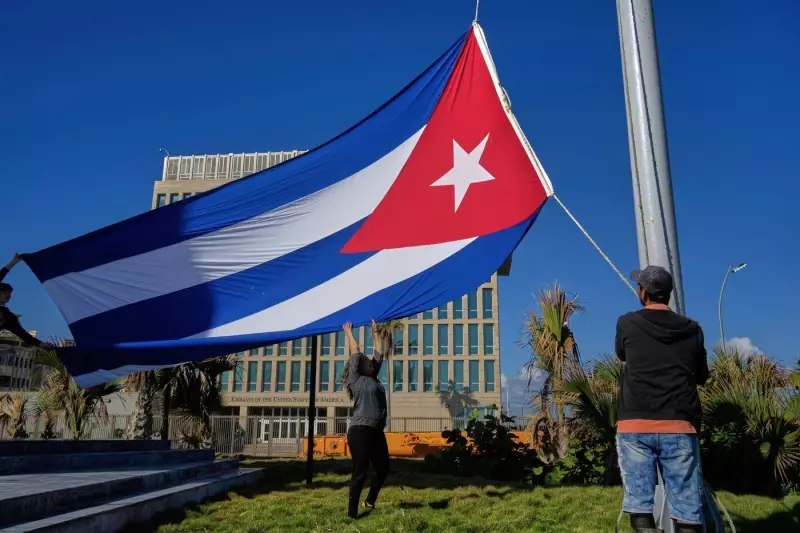
In a powerful visual statement, Cuban workers flew the national flag at half-mast at the Anti-Imperialist Tribune near the U.S. embassy in Havana. This act of mourning honored the Cubans who lost their lives in Caracas just two days prior, during the operation that seized President Maduro. The scene, captured by Associated Press photographer Ramón Espinosa, underscores the deep personal and political ties between the two nations. For decades, Venezuela has been Cuba's most vital economic partner, providing subsidized oil in exchange for medical personnel and security assistance.
The removal of Maduro threatens to sever this lifeline, potentially crippling Cuba's already fragile economy and creating a major humanitarian and political crisis for its government. The event marks one of the most significant direct U.S. interventions in Latin America in recent history, with immediate ripple effects being felt across the hemisphere.

Canadian Reactions and Economic Ripples
The fallout from the Venezuela operation quickly reached Canadian shores, influencing both political rhetoric and financial markets. Alberta Premier Danielle Smith pointed to the instability as evidence of the urgent need for new West Coast pipeline infrastructure to secure Canadian energy exports. "The capture of Maduro outlines the urgency of a West Coast pipeline," Smith stated, framing the event as a lesson in energy security.
On Bay Street, the U.S. designs for Venezuela's massive oil industry put immediate pressure on Canadian oil stocks. Investors fear that a swift return of Venezuelan crude to the global market, under potential U.S.-backed management, could undercut prices and demand for Canadian exports, highlighting the interconnected nature of global energy politics.
In a related but more dismissive comment, Ontario Premier Doug Ford referenced past annexation threats from former U.S. President Donald Trump, suggesting the Venezuela takeover was no more concerning. "It's not going to frighten me," Ford remarked, downplaying the regional implications.
Broader Implications and Legal Precedents
The political and legal ramifications are only beginning to unfold. Former Canadian Public Safety Minister Marco Mendicino weighed in on the potential judicial path for Maduro, suggesting observers "look to the precedent of Noriega." This refers to the U.S. capture, trial, and imprisonment of Panamanian leader Manuel Noriega in the 1990s, setting a potential blueprint for Maduro's fate.
The event has instantly become a focal point in discussions about sovereignty, foreign intervention, and the future of leftist governments in Latin America. For Cuba, the path forward is fraught with risk. The loss of Venezuelan subsidies could force rapid and painful economic adjustments, increase domestic pressure on the government, and potentially alter its foreign policy stance. The sight of the flag at half-mast in Havana is likely a precursor to a much longer and more difficult period of national adjustment, as the island nation confronts the loss of its principal ally.
The coming weeks will be critical in determining whether Cuba can find alternative partners or if it will face unprecedented isolation, making this a defining moment for its future and for regional stability.