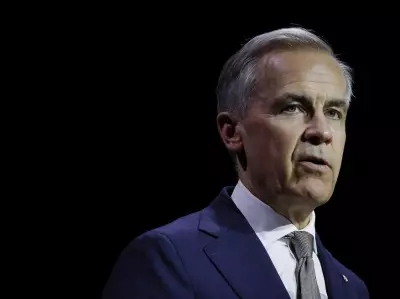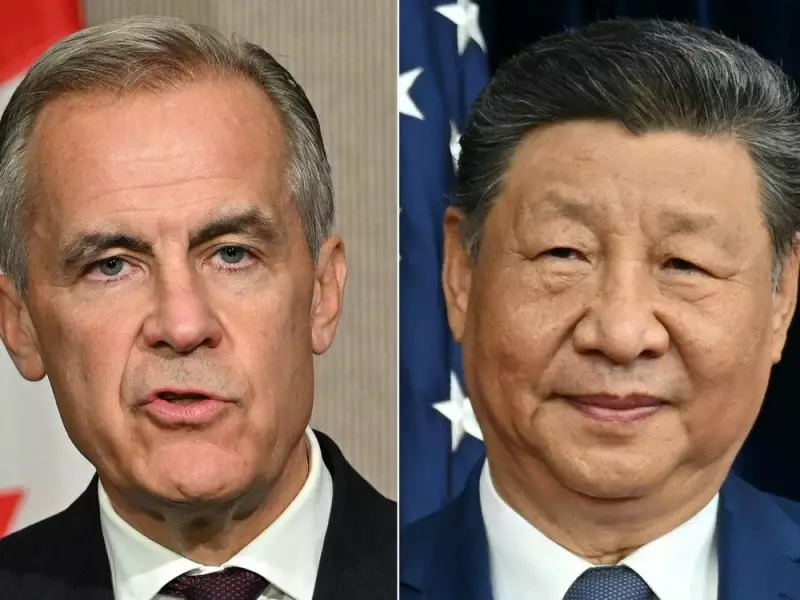
Prime Minister Mark Carney is scheduled to travel to China next week for high-level trade discussions with President Xi Jinping. This diplomatic move comes at a moment of heightened geopolitical friction, as the United States intensifies efforts to curb Chinese influence across the Western Hemisphere.
A Delicate Balance Between Allies and Rivals
The planned visit follows a meeting between Carney and Xi Jinping in late October during an APEC summit, where both leaders agreed to strengthen bilateral ties. Xi Jinping extended a formal invitation for Carney to visit China, which the Prime Minister is now accepting.
This outreach occurs against a complex backdrop. Analysts argue that Canada has little to gain from isolating itself from the United States or its Western allies in the short term, particularly as a reaction to the policies of former U.S. President Donald Trump. While tariffs and provocative rhetoric from a long-standing ally are seen as unjustified, the response should not be a rush to appease other global powers.

The fundamental reality of Canada's geopolitical position is that the Americas exist within a U.S. security perimeter, a fact Washington has consistently enforced. Since the fall of New France in 1763, Canada has largely deferred to either Westminster or Washington on major foreign policy matters, never acting as a superpower in its own right.
The Legacy of "Independent" Foreign Policy
Historical attempts to chart a more autonomous course, such as those pursued by former Prime Minister Pierre Trudeau, often resulted in what critics describe as an alignment with the "Global South" and its allies. This approach frequently meant distancing Canada from traditional Western partnerships.
In the contemporary context, this list of alternative partners includes nations like China, Iran, Russia, Cuba, and Venezuela. Observers note that these are not typically destinations people flock to; instead, significant numbers of citizens seek to leave these countries for Western nations like Canada, Australia, and the United States.
For over half a century, particularly under Liberal governments, Canada has maintained comparatively harmonious relationships with countries like Cuba and China. Some progressive circles view these connections as a moral stance, a way to demonstrate superiority over U.S. foreign policy by engaging with repressive regimes.
Shifting Ground in the Hemisphere
The recent capture of Venezuelan leader Nicolás Maduro by U.S. special forces has added a new dimension to regional dynamics. Maduro, a close ally of both China and Russia, represented a strategic foothold for these powers in what Washington considers its backyard. His removal is viewed as a significant blow to Chinese and Russian influence in the region and is seen as part of a broader strategy by the United States to deny its rivals a permanent base so close to home.
Prime Minister Carney's upcoming trip to Beijing therefore places Canada at a critical juncture. It forces a national conversation about whether strengthening ties with China represents prudent economic diversification or a risky geopolitical alignment that could undermine Canada's foundational relationships with its closest allies.
The challenge for Ottawa will be to stand firm for Canadian interests without embracing partnerships that may ultimately conflict with the nation's long-term security and values. The visit will be closely watched as a signal of Canada's foreign policy trajectory in an increasingly polarized world.